
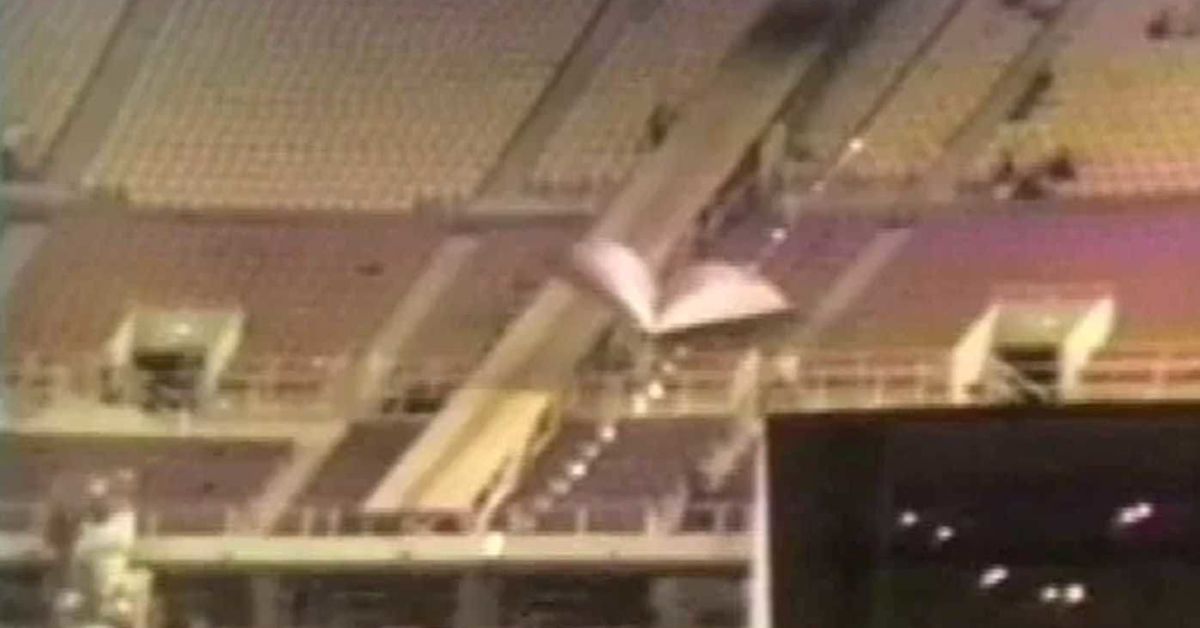
As the season kicked off, the Philadelphia Phillies planned a spectacular stunt featuring a performer known as “Kiteman,” who was set to glide down a ramp from the upper deck of the stadium, launching off with a hang-glider to deliver the ceremonial game ball. To facilitate this, an impressive ramp was constructed, with promotional material created to build excitement around the event.
However, a players’ strike delayed the opening game, preventing the original stunt performer from attending the rescheduled matchup. Instead, Bill Giles, the team’s promotions director, enlisted a local hardware store owner with kite-flying experience. While initially hesitant, the new stuntman agreed to participate on the condition of receiving $1,500—up from the original offer of $1,000. Despite the potential dangers involved, he declined to conduct a practice run.
The day of the stunt saw an impressive turnout of 38,000 fans, but the stuntman was initially paralyzed by fear at the top of the ramp, eliciting booing from the crowd. Ultimately, he began his descent but was unexpectedly caught by a gust of wind, leading to a dramatic crash into the stands. Witnessing the near-catastrophe, Giles feared the worst, but the situation only intensified the audience’s displeasure, resulting in louder booing.
In the aftermath, the failed stunt foreshadowed a disappointing season for the Phillies, who ended up at the bottom of the National League East. However, Kiteman became a beloved figure, reattempting the stunt multiple times, with fans increasingly eager to see it go wrong. Ironically, when Kiteman finally succeeded in landing in the outfield in 1990, the crowd booed, having grown fond of the missteps that had become a cherished tradition.