
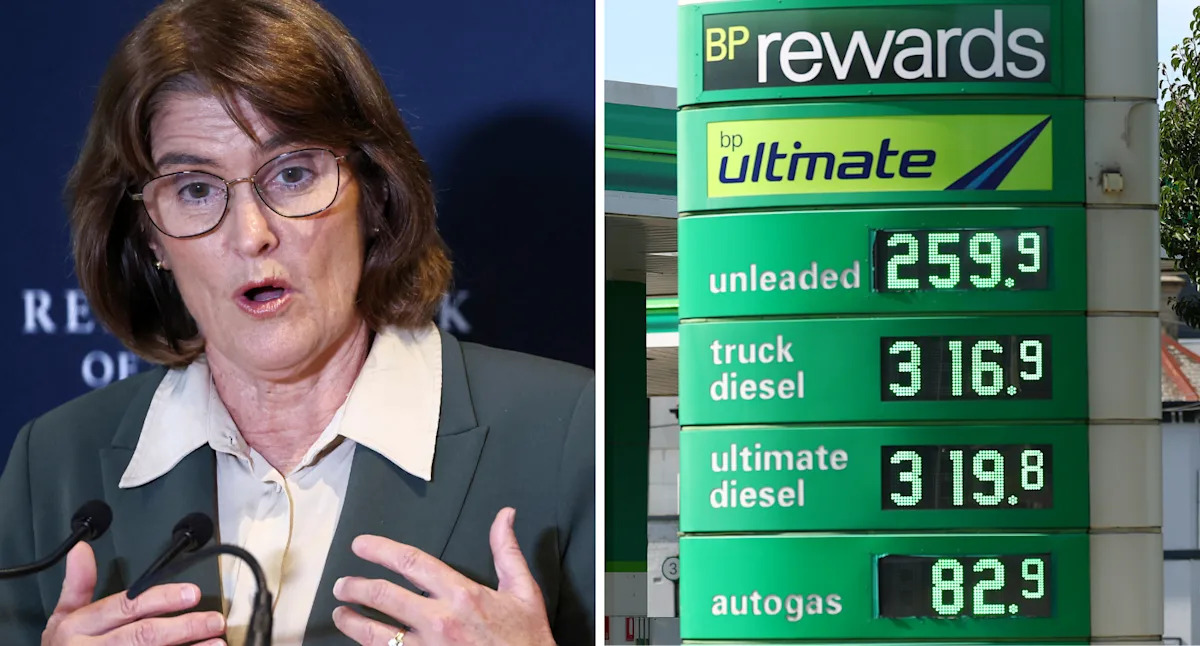
The Reserve Bank of Australia (RBA) faces tough decisions amid rising inflation, partially driven by increased fuel costs due to the ongoing Middle Eastern conflict. Chief economist Sally Auld from NAB asserts that increasing interest rates in May could be seen as the “policy of least regret” as inflation moves further away from the target.
Recent NAB data indicates a 2.1% rise in consumer spending for March, largely due to a significant 33.5% jump in fuel-related expenditure. Even without fuel spending, consumption still grew by 0.7%. Auld noted that while consumer activity had remained strong in late 2022, there has been a slight decrease in 2023.
This challenging situation places the RBA in a difficult position; while inflation continues to rise, economic growth is showing signs of slowing, which could lead to higher unemployment rates—counterproductive to their goal of achieving full employment. Moreover, food spending increased by 1.7%, likely due to precautionary stockpiling, and other services saw a 2% rise in spending, influenced by rising construction costs. Despite the resilience of discretionary goods spending, consumers are pulling back on discretionary services.
Looking ahead, NAB and other major banks anticipate that the RBA will hike interest rates in May, with Westpac predicting additional increases in June and August. RBA Deputy Governor Andrew Hauser previously warned about elevated inflation levels even before the conflict, expressing uncertainty regarding whether current interest rates are effective.
Auld acknowledged that while they expect another rate hike, their confidence in that prediction has diminished since last month. Consumer sentiment has notably dropped 12.5%, the most substantial decrease since the onset of the COVID-19 pandemic, and business confidence has experienced a stark 29% decline—reflecting concerns reminiscent of the Global Financial Crisis (GFC).
Inflation concerns extend beyond fuel prices, with Auld noting that rising supplier costs may lead to increased consumer prices, resulting in further inflationary pressure. Current inflation trends show a minor decline from 3.8% to 3.7% in February, with trimmed mean inflation remaining steady at 3.3%.
To mitigate the risk of exacerbating inflation, Auld suggests that the RBA’s prudent course would involve a May rate hike, allowing time to observe the cumulative effects before deciding on subsequent actions. While further rate hikes may be necessary, they would likely occur later in the year. Balancing these decisions between inflation control and economic growth presents a considerable challenge for the RBA.