
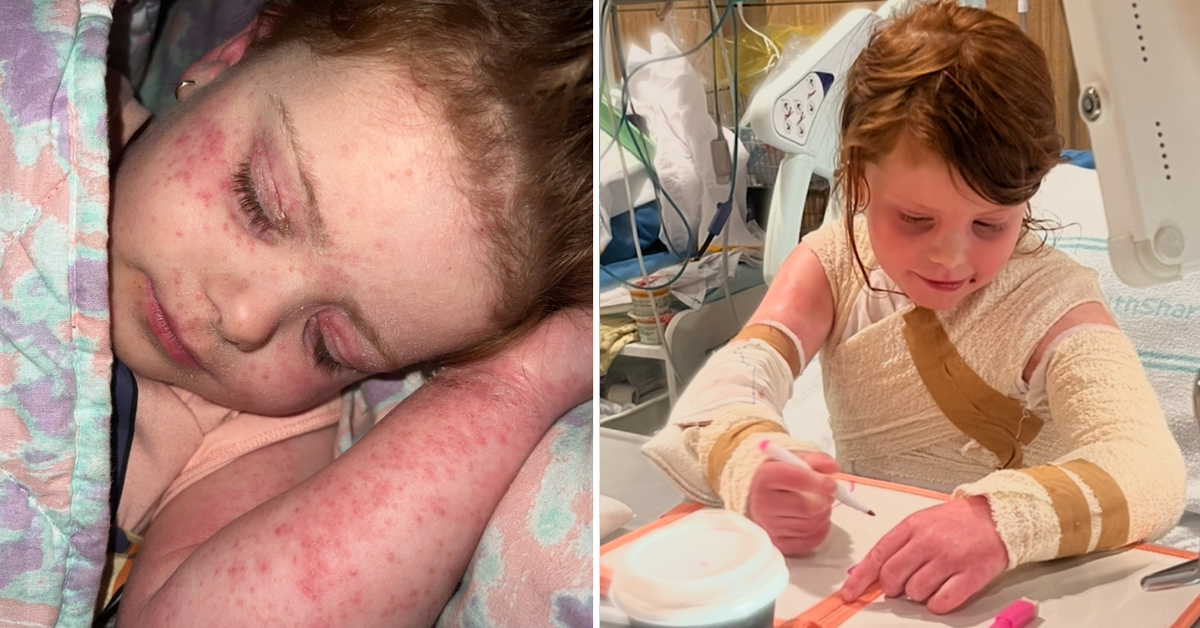
Jade Hlucshniow faced the distressing prospect of selling her home to fund treatment for her daughter, Ruby, who suffered from severe eczema that had dramatically impacted her childhood. At just seven years old, Ruby’s condition caused unbearable pain and discomfort, leaving her family in turmoil. Jade recounted the heart-wrenching nights filled with Ruby’s cries for relief, expressing the profound helplessness they all felt.
Before receiving proper treatment, life for Ruby was a nightmare, resulting in her missing school and becoming withdrawn due to her self-consciousness about her appearance. Jade noted that Ruby was so anxious about people staring at her that she refused to go out.
Upon discovering Dupixent, a treatment that Jade described as a “miracle”, they encountered an insurmountable financial barrier with a monthly cost of about $1,600. The family contemplated various drastic measures, including selling their home, in an effort to make the treatment accessible. Fortunately, Ruby gained access to Dupixent a year and a half ago and has since transformed into a “different child.” Jade described her immense relief, stating they could finally breathe again after coping with their daughter’s suffering for so long.
Currently, Dupixent is available under the Pharmaceutical Benefits Scheme (PBS) for those aged 12 and above, but children younger than this face a significant financial hurdle without special access. The national charity Eczema Support Australia is advocating for the subsidy of Dupixent for children aged six months to 11 years, highlighting the urgent need for assistance.
Jade’s plea resonates with many families struggling to afford treatments that could dramatically change their children’s lives. If Dupixent were covered under the PBS, the cost would plummet to approximately $25 a month. Eczema affects around three million Australians, including one in three children under six, proving the urgent need for accessible treatments.
Dr Li-Chuen Wong from the Australasian College of Dermatologists reinforced that severe eczema could be debilitating for young children, leading to crucial sleep disruption, continuous itching, and skin infections. The Hlucshniow family’s experience starkly contrasts with Ruby’s current life, where she actively engages in sports and social activities, experiences she previously avoided.
Despite this progress, a spokesperson from the Department of Health advised that the pharmaceutical company has yet to submit necessary documentation for Dupixent’s PBS listing to proceed, with revisions set for consideration in July 2026. As the Hlucshniow family celebrates their daughter’s newfound happiness, they are also pushing for broader access to this essential medication, hoping to alleviate the burdens of countless other families in similar situations.