
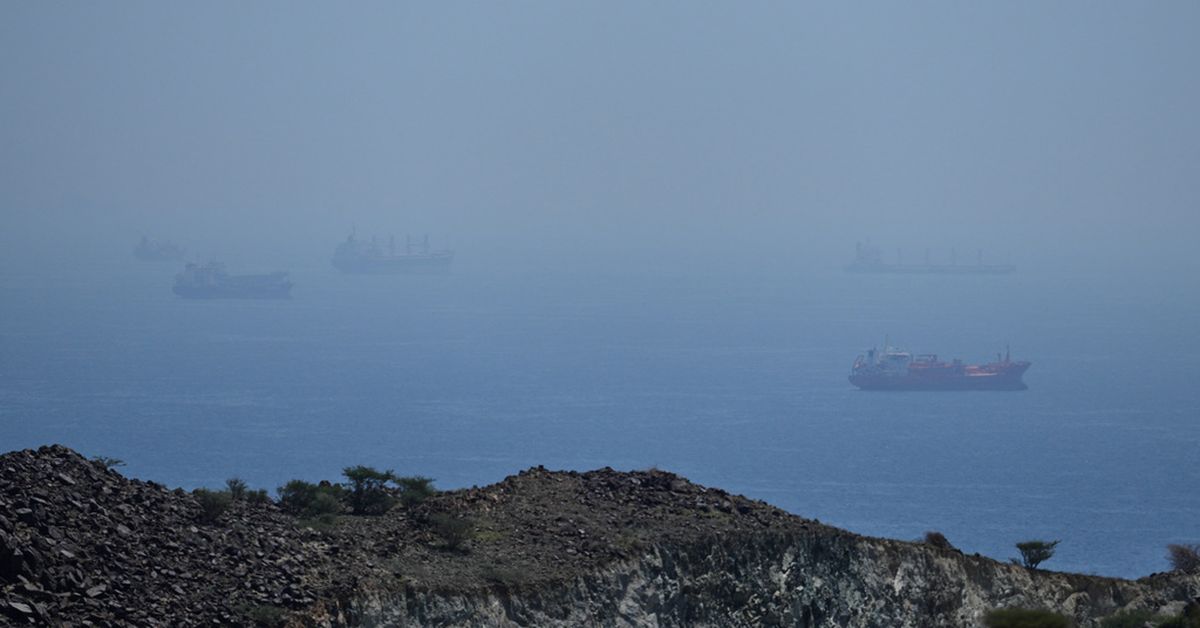
On Wednesday, tensions escalated in the Strait of Hormuz as Iran’s Revolutionary Guard fired upon a container ship, highlighting ongoing risks for commercial transport in a vital corridor for global energy supplies. This incident occurred amid stalled negotiations for a ceasefire between Iran and the United States in Islamabad.
The attack took place in the morning, shortly after US President Donald Trump had announced an indefinite extension of a ceasefire with Iran, which was set to expire soon. The Revolutionary Guard soon attacked another vessel in the strait; however, the British military reported no damage. The maritime monitoring centre did not confirm the origin of fire on the second ship, though suspicions pointed towards Iran, whose leadership appears to be taking a stronger position ahead of negotiations, following prior talks that deteriorated into conflict.
Hardline factions within Iran showcased their resolve with public demonstrations, including the deployment of missiles and launchers, signalling defiance against both Israel and the US. Despite previous airstrikes targeting Iran’s missile capabilities, Wednesday’s aggression suggests that maritime threats persist, possibly disrupting global energy supplies further without a diplomatic solution.
Moreover, Trump reiterated the US blockade of Iranian ports, which Iran called “unacceptable,” a point of contention that has delayed progress in talks. The Revolutionary Guard threatened to carry out significant retaliatory strikes on US assets in the region.
In recent days, Iran’s military actions followed the seizure of an Iranian container ship by US forces and the boarding of an oil tanker linked to Iran’s oil operations. While the Revolutionary Guard stated the initial attack was due to the vessel ignoring warnings, the incident adds to the already fraught situation in the strait, where about 20% of the world’s oil and gas transit during peacetime.
The impact on global oil prices is palpable, with Brent crude trading at approximately $98 a barrel, reflecting more than a 30% increase since the onset of conflict. Meanwhile, Pakistan continues to pursue diplomatic dialogues between the two nations, although a significant gap remains on pivotal issues such as nuclear enrichment and regional influence.
Following the ceasefire announcement, UN Secretary-General António Guterres expressed optimism for diplomatic progress. In parallel developments, Lebanon witnessed a deadly drone strike attributed to Israeli forces amid its ongoing conflict with Hezbollah, resulting in casualties, although Israel denied involvement.
As the conflict endures, the toll has become severe, with thousands killed in Iran and Lebanon, and several casualties reported among US and Israeli troops. The situation in the region remains volatile, underlining the urgent need for a renewed commitment to peace talks.