
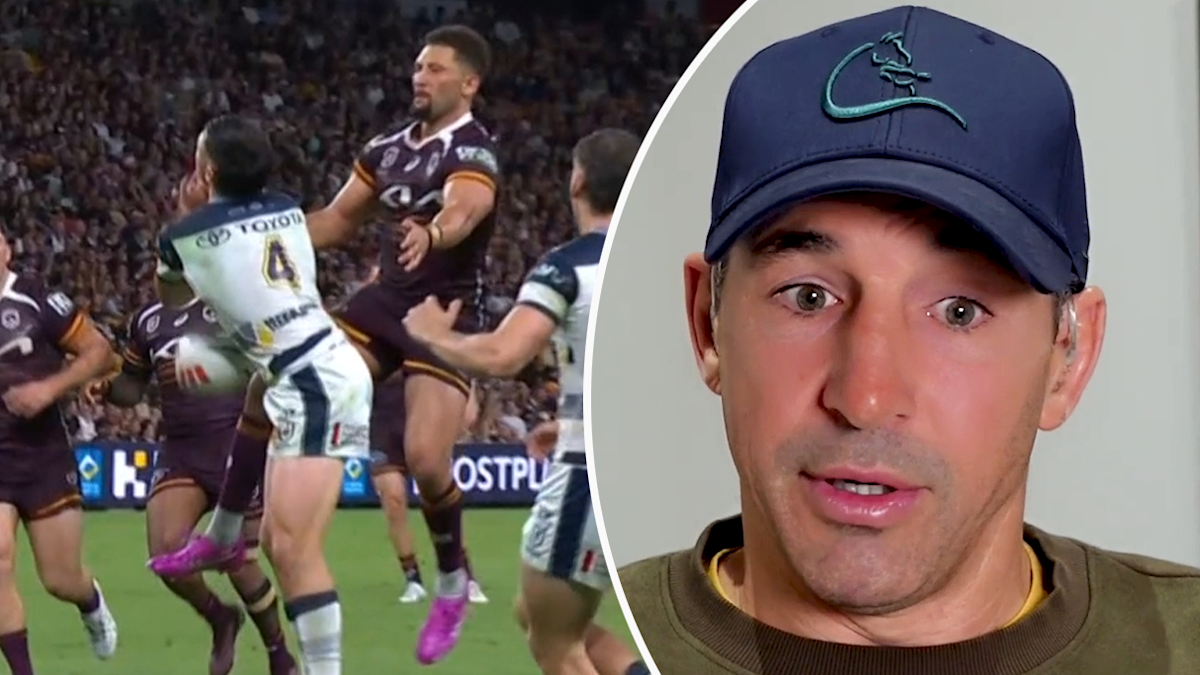
NRL legend Billy Slater has raised concerns about the increasing technicality of the league, particularly following controversy surrounding the disruptor rule during recent matches. This rule sparked debate after officials disallowed a try by Brendan Piakura for the Brisbane Broncos due to an incident involving Gehamat Shibasaki during a kick contest. Commenting on the situation, Slater advised centre Tom Chester to improve his catching skills after he mishandled a kick that led to the try being voided.
Similar criticism followed the decision to negate a try scored by Robert Toia, igniting frustration from both coaches, Michael Maguire and Trent Robinson. NRL’s head of football, Graham Annesley, later admitted that the decision regarding Toia should have been different. He clarified that the NRL does not enforce a blanket prohibition on one-handed attempts to secure the ball, which had caused confusion among teams after an earlier directive.
Slater expressed his belief that the game’s recent emphasis on technicalities is detrimental. He stated on his podcast that the increased complexity may be straining referees, who are attempting to interpret the specific instructions provided to them. He advocated for a more intuitive approach, emphasising that match officials should assess the intent behind players’ actions rather than adjudicating based on rigid definitions.
He further elaborated that constant rule scrutiny has made the game excessively strict, potentially leading to unfair penalties for genuine gameplay errors, like a player misjudging their jump during a contest for the ball. Slater feels that by focusing excessively on technical infringements, the essence of competitive spirit is being undermined.
This sentiment extends to a broader worry about the nature of the game being overly regulated. He highlighted the possibility that the game’s rigid enforcement could provoke a penalty for almost any movement on the field, thus diluting its excitement and flow. Ultimately, Slater concluded that maintaining some degree of common sense and allowing referees to use their judgment could alleviate some of the current issues plaguing the NRL.
He stressed that players should take accountability for basic skills, such as catching, instead of having rules mitigate their mistakes. Slater’s insights reflect a desire for a balance between fair play and the natural chaos of rugby league, urging a return to a less pedantic, more instinctive style of officiating.