
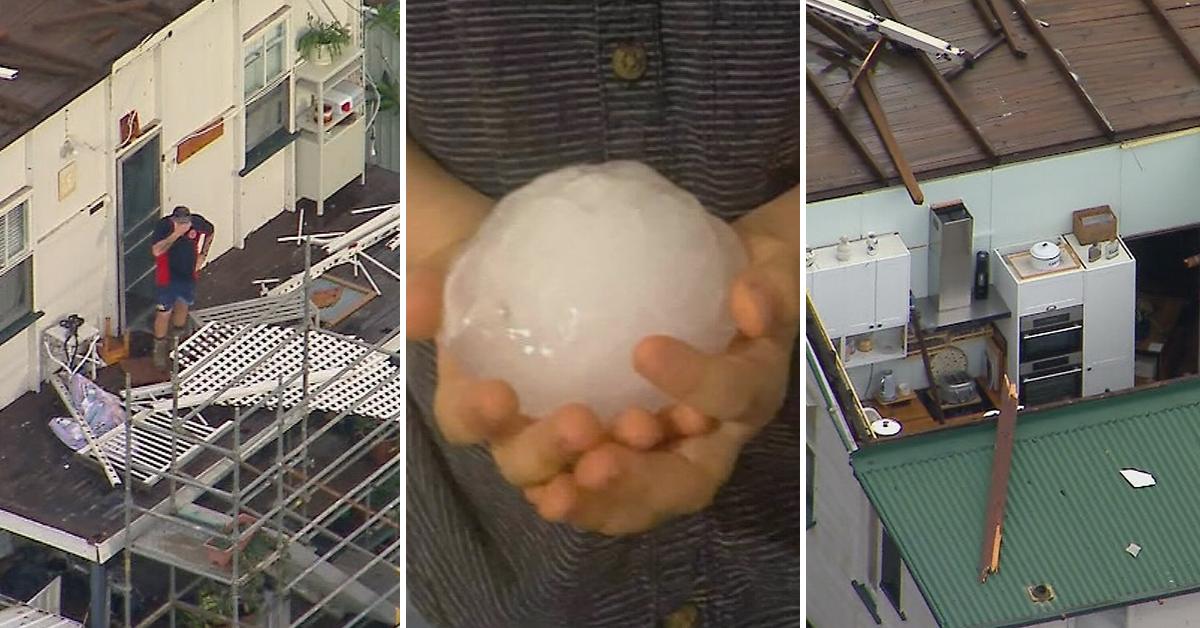
Severe hailstorms that struck Queensland’s southeast and northern New South Wales late last year resulted in significant insurance payouts, surpassing those caused by ex-Tropical Cyclone Alfred, according to the Insurance Council of Australia (ICA). The ICA cautioned that ongoing conflicts in the Middle East could further inflame repair and rebuilding costs for homes affected by extreme weather.
The ICA has raised its estimate for insurance claims related to extreme weather in 2025 from $3.5 billion to $4.8 billion, attributing the increase to rising repair costs and more claims being filed. The severe storm and hail that occurred in November alone led to nearly 93,000 claims totalling $1.78 billion. These claims encompassed damage to vehicles, roofs, and properties flooded by stormwater, as well as destruction caused by fallen trees.
In contrast, Cyclone Alfred received a higher volume of claims—approximately 133,000—but the total cost was around $1.5 billion. Remarkably, Queensland accounted for four of the five most expensive extreme weather events within the year, with the North Queensland floods and spring storms in southeast Queensland resulting in costs of $316 million and $895 million, respectively.
ICA CEO Andrew Hall commented on the situation, highlighting that while Queensland is accustomed to extreme weather, experiencing four significant events in a single year is unusual, with many communities still in recovery. He noted that the insurance industry is mindful of the supply chain challenges and pressures affecting construction and transport due to the ongoing Middle Eastern conflict, lamenting the reality that these cost increases will exacerbate the already high expenses associated with rebuilding and repair.
Nationally, insurers reported handling nearly six times the number of claims from extreme weather in 2025 compared to the previous year, incurring $4.8 billion in insured losses and a staggering $8.6 billion when considering broader economic implications. Hall underscored the necessity of building flood levies, dams, and other large-scale infrastructure to protect communities and mitigate cost pressures associated with extreme weather events.
In conclusion, the growing financial burden on Australian homeowners and the insurance sector highlights the urgent need for preventative infrastructure to safeguard against the escalating frequency and severity of extreme weather incidents.