
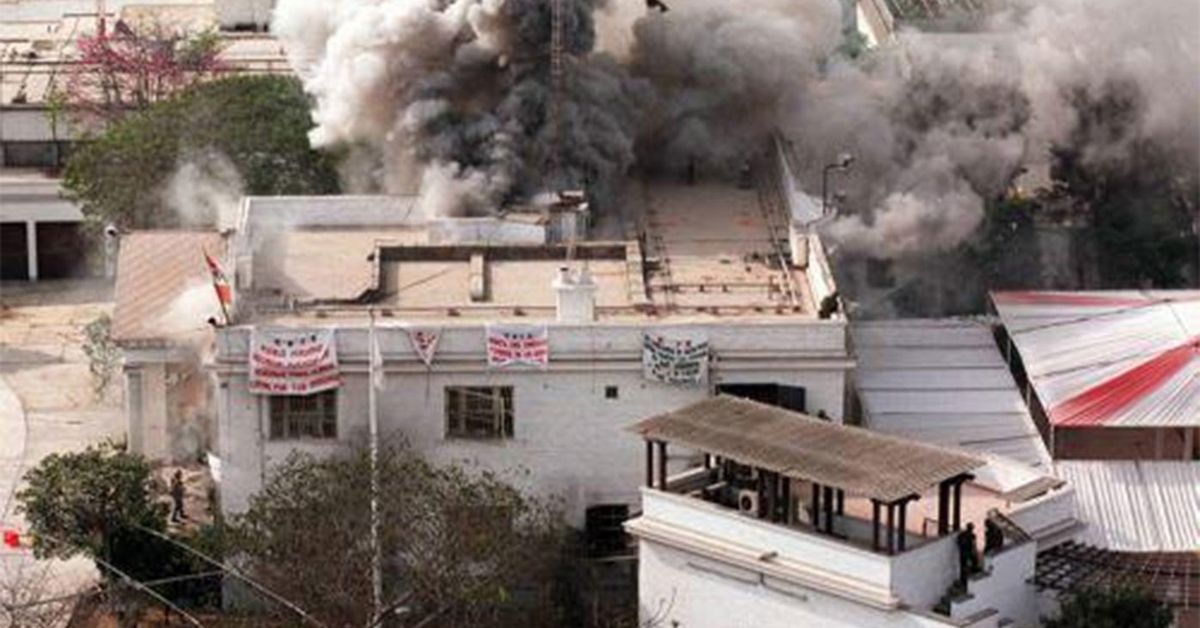
The hostage situation in Peru, which lasted four months, culminated in a dramatic and violent resolution on April 22, 1997. A group of fourteen members from the Tupac Amaru Revolutionary Movement (MRTA) stormed the residence of the Japanese ambassador, Morihisa Aoki, during a celebration for the Japanese emperor’s birthday on December 17. They took hundreds of diplomats, officials, and business leaders hostage, including high-ranking government officials and ambassadors.
The MRTA demanded the release of imprisoned comrades and a halt to Peru’s free market reforms. To pressure the hostage-takers, authorities resorted to tactics such as blasting loud music, shooting into the air, and throwing stones at the compound, while cutting off essential services like water and power. Meanwhile, a detailed plan was executed to construct an exact replica of the ambassador’s residence nearby, allowing for strategic manoeuvres.
To gather intelligence, hidden microphones and a two-way radio were smuggled in disguised as food and a guitar. These efforts revealed the MRTA’s routine, showing a lapse in vigilance at 3pm when they often played indoor soccer. This critical insight laid the groundwork for a tactical counter-operation.
At 3:23pm, three blasts were detonated: the first blew a hole in the floor where some of the guerrillas were, killing three instantly. This was the cue for about 30 commandos who had been awaiting the signal to burst into the room, while an additional 20 commandos stormed through the front entrance. Additional explosives were triggered simultaneously to breach other parts of the building, allowing commandos from underground tunnels to access the second floor.
The hostage-takers had moved their captives to upper levels, which ultimately facilitated the assault. Commandos were equipped to distinguish hostages from their captors by having the former wear light-coloured clothing. The operation was swift and effective, resulting in the death of all 14 guerrillas within 20 minutes, while also freeing the hostages. Tragically, one hostage and two commandos lost their lives in the rescue.
In a controversial aftermath, it emerged that two guerrillas were executed after being captured, a tactic reportedly ordered by President Alberto Fujimori, who had declared that no guerrillas should survive the operation. This event highlighted the intensity of Peru’s struggle against domestic terrorism and underscored the lengths to which the government would go to ensure the safety of its citizens.