
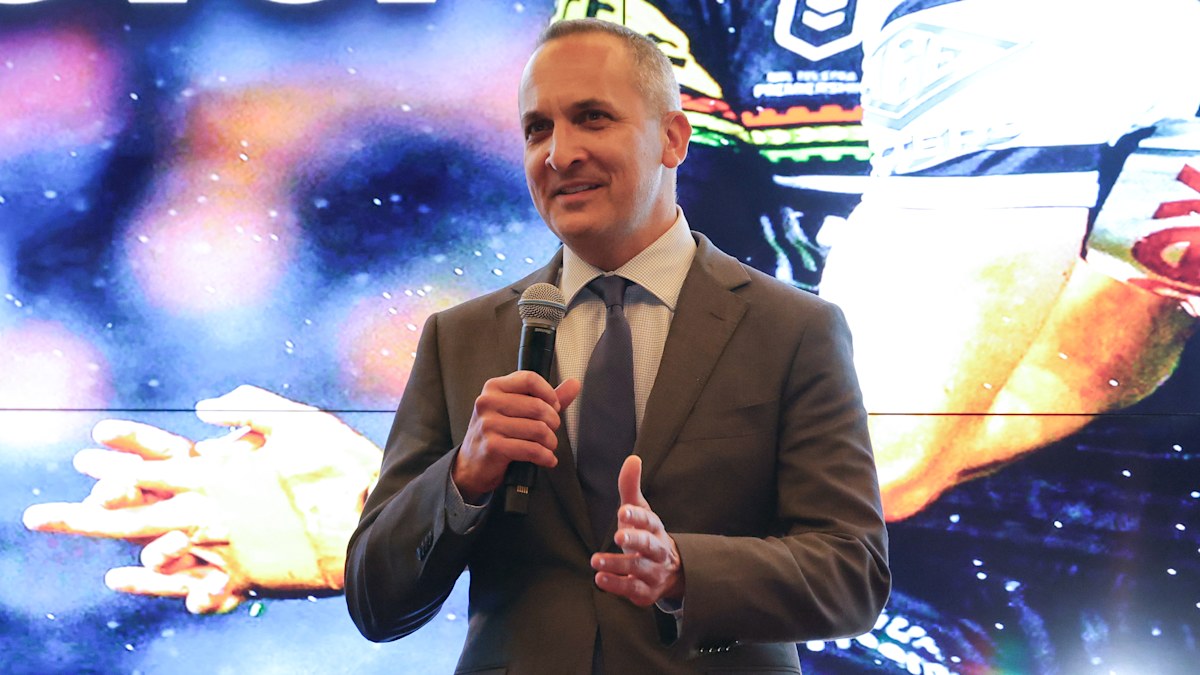
Andrew Abdo, the CEO of the NRL, has outlined the league’s intention to acquire a 33% stake in the English Super League during discussions initiated in Las Vegas earlier this year. This move aims to ensure that Super League clubs benefit from enhanced media and sponsorship revenue, contingent upon the NRL taking on management responsibilities.
Abdo has addressed concerns from UK clubs about potentially becoming subordinate to the NRL, asserting that the goal is to strengthen rugby league in the UK and Europe. He emphasised that the plan seeks to attract players from various codes and enhance talent development pathways, ensuring the local competition thrives, rather than serving as a feeder league for the NRL.
However, some key figures, like Leeds Rhinos chairman Paul Caddick, remain sceptical. Caddick has firmly stated that they do not intend to be “swallowed up” by the NRL, questioning the motivations behind the NRL’s interest. He expressed concerns that if the Australian league extracts value from the UK game, it could exacerbate existing disparities and undermine the Super League.
In response to these apprehensions, Abdo encouraged an open dialogue while acknowledging that speculation may arise in the absence of information. He rejected the notion that the Super League would become merely a subservient entity, affirming that cooperation rather than domination is the essence of their approach. Abdo underscored the importance of strong governance, which he sees as critical for long-term growth and collaboration between the two competitions.
The necessity for an investment comes as Super League clubs collectively face significant financial losses each year, despite a rise in attendance figures. ARLC chairman Peter V’landys has warned that the UK rugby league could face severe challenges if new revenue sources are not established.
Rhodri Jones, head of RL Commercial, described the ongoing discussions surrounding the investment as “encouraging,” asserting that the NRL is a natural ally for the Super League. He emphasized the importance of maintaining autonomy within the UK governance structure while also seeking a workable partnership that enables both leagues to thrive collaboratively without sacrificing the independence of the Super League.
The conversations have highlighted a collective vision for globalising the sport while ensuring that financial benefits are distributed equitably across all levels of the game, including women’s and community rugby leagues. Any investment must aim to strengthen not just the Super League but to enhance the entire rugby league ecosystem in the UK.