
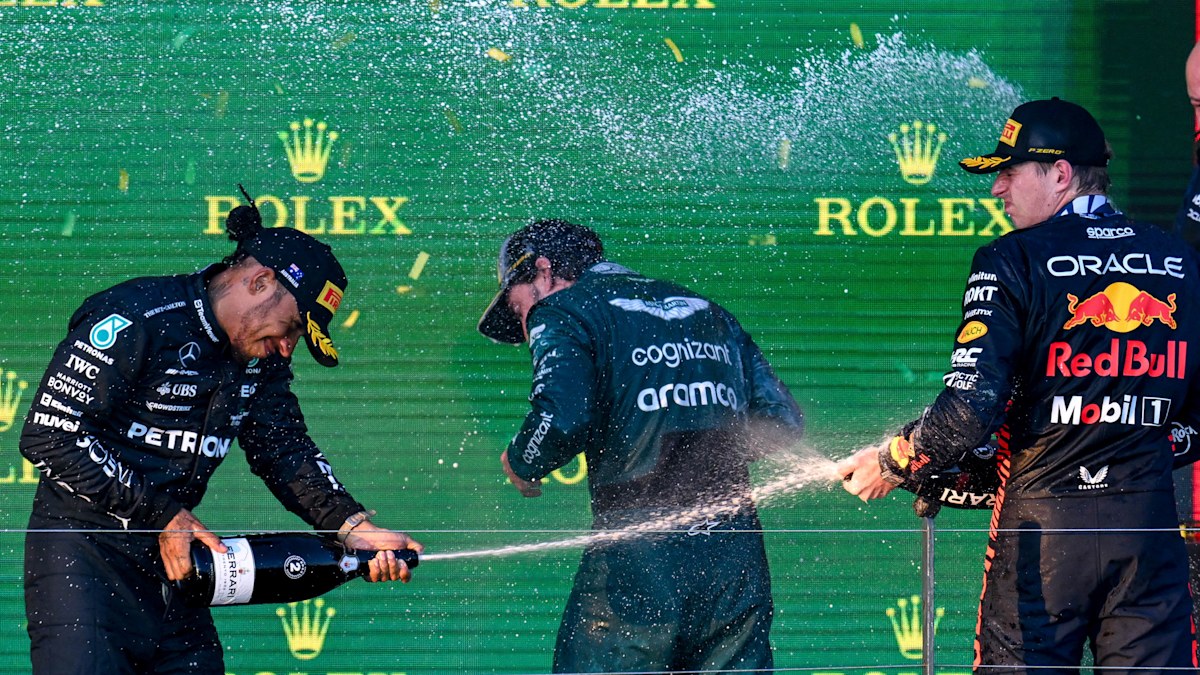
What if a shocking scenario unfolded in Formula 1, with legends Fernando Alonso, Lewis Hamilton, and Max Verstappen all retiring at the end of 2026? Though it may sound improbable, the discussion has begun to circulate in the paddock, especially amid rising tensions this season.
Alonso, now 44 and a new father, has faced challenges with his Aston Martin car, which may limit his time in the sport. Verstappen, meanwhile, has expressed thoughts about retirement, especially after the departure of his long-time engineer. Coupled with Hamilton’s illustrious career at the age of 41, the thought of their exits looms large over Formula 1.
Together, these three champions hold 218 race wins and have significantly shaped the hybrid era of F1, making them icons with fiercely loyal fanbases. Their collective departure would create a considerable gap in experience, leaving a younger generation of drivers, including reigning champion Lando Norris, Charles Leclerc, and Oscar Piastri, to ascend to prominence. The average age of the 2026 grid would drop significantly if these veterans were to leave the scene.
The rise of these younger drivers has coincided with the visibility boost Formula 1 has received, particularly from the Netflix series Drive to Survive. However, while a fresh crop of talent is emerging, they lack the life experience that the seasoned trio possesses. This could lead to challenges for newcomers, who have been able to lean on their predecessors for engineering and media-related queries.
With motorsport expanding beyond F1 to include rallying, WEC, MotoGP, and endurance racing, there is potential for veterans like Alonso or Verstappen to find new avenues to explore. Both have previously stepped away from F1 while still being capable competitors.
The current generation shows immense potential; young talents, such as Kimi Antonelli, have gained early entry into elite programs. However, the depth of experience present in Alonso, Hamilton, and Verstappen will be hard to replicate. Their absence might leave rookies struggling without guidance, resulting in a less competitive atmosphere.
As the next races loom, thoughts turn to how the sport will adapt in the absence of these heavyweights. Will the younger drivers be able to fill the void, or will Formula 1 face a challenging transition? Understanding their predecessors’ insights and experiences will be crucial for the future of the sport, as it continues to navigate this unpredictable landscape. Formula 1 will return to competition on 2 May in Miami, with eyes keenly set on how the dynamics will shift in the coming years.