
A customer’s dissatisfaction with a birthday cake led to a significant investigation in China, revealing a vast network of fraudulent food vendors. The enquiry began last summer after Beijing resident Liu received a cake adorned with an inedible flower through an online platform. Liu’s complaint prompted local authorities to act.
Investigations unearthed nearly 67,000 so-called “ghost” vendors, who had been selling over 3.6 million cakes without legitimate business licenses. These vendors operated without actual storefronts, often reselling customers’ orders to the lowest bidder on intermediary platforms, which compromised food quality and safety.
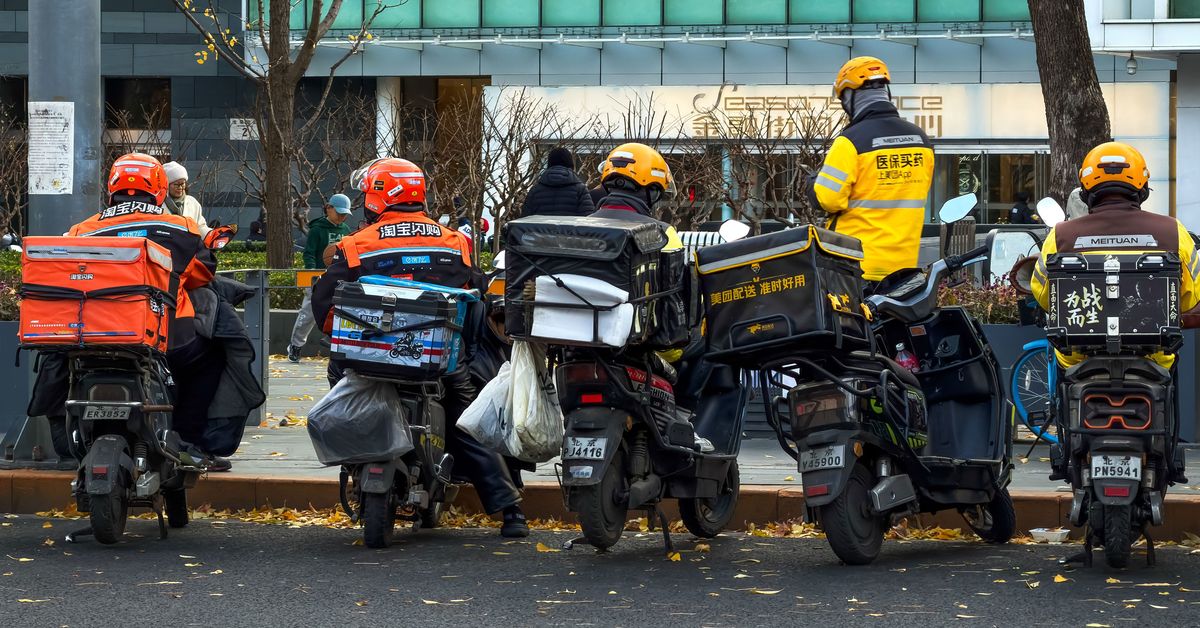
This prompted a nationwide crackdown by China’s State Administration for Market Regulation, which discovered the involvement of seven major delivery platforms like Alibaba and JD.com, who had not properly overseen vendor licensing or customer safety. The outcome was a staggering record fine totalling 3.6 billion yuan (approximately $738 million), marking the largest penalty since the 2015 amendment of the food security law.
The investigation has spotlighted issues within the fiercely competitive delivery market in China, where price wars—known as “involution” or neijuan—have pressured businesses to cut costs at the expense of quality. The government’s ongoing anti-involution campaign aims to alleviate these practices and reduce unhealthy competition across various sectors.
Some delivery platforms have acknowledged the fines, promising to amend their operations. Financial analyst Flora Chang noted that while these penalties may help improve the quality of competition, the journey towards recovery in profitability remains challenging.
Instances of obstruction arose during the investigation, including employees resisting queries and even a security head confronting law enforcement. The heaviest fines were levied against PDD, which faced 1.5 billion yuan ($309 million) due to its deliberate non-cooperation. Other companies, including Alibaba and Meituan, have indicated their commitment to improving compliance in light of the findings.
The entire episode underscores the urgent need for enhanced regulations and enforcement in the rapidly evolving food delivery industry, as well as the ongoing challenges posed by relentless price competition.