
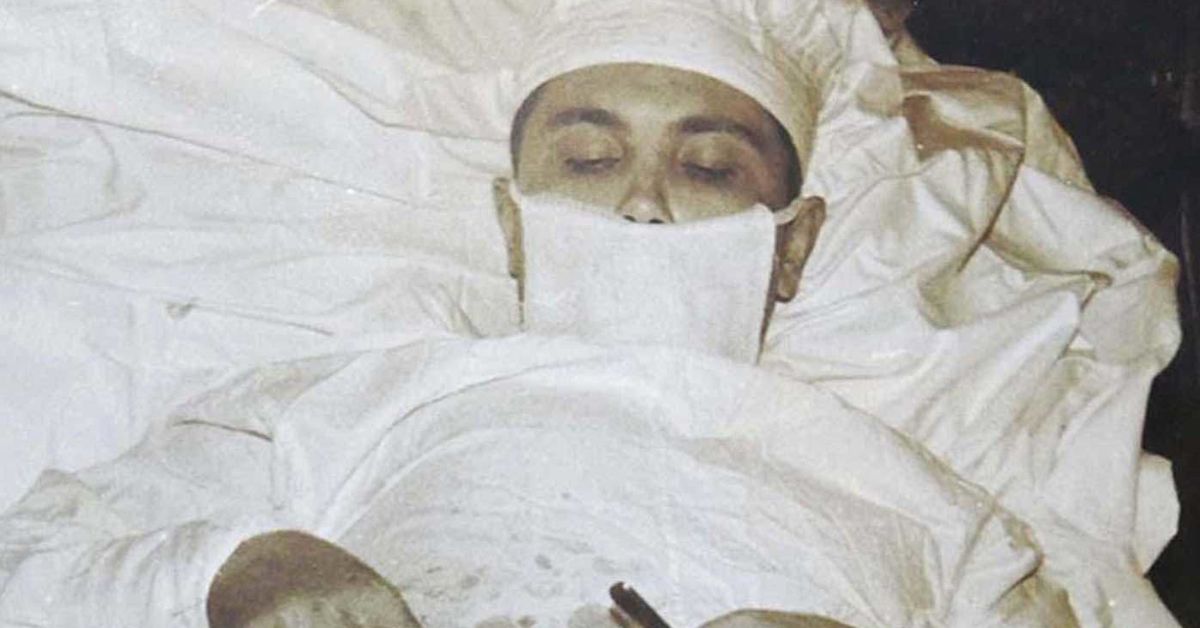
In April 1961, a remarkable and harrowing incident unfolded in Antarctica when Dr. Leonid Rogozov, a 27-year-old physician stationed at the newly opened Novolazarevskaya Station, discovered he had appendicitis. Isolated from immediate medical aid, he faced the daunting task of performing surgery on himself—1600 kilometres away from the nearest research station and without any available aircraft.
Initially, Rogozov experienced symptoms including weakness, nausea, fever, and abdominal pain. Despite his serious condition, he decided to remain calm, documenting his situation in his diary, “I am keeping quiet about it, even smiling. Why frighten my friends?” However, as his condition worsened, it became evident that he was suffering from peritonitis, which made his predicament increasingly critical.
Given the extreme weather conditions—a chilling -15 degrees Celsius and prolonged hours of darkness—Rogozov concluded that self-surgery was his only viable option. “I have to think through the only possible way out: to operate on myself,” he wrote, demonstrating his determination in the face of despair.
On the day of the surgery, Rogozov administered local anaesthetic and prepared to make a 12-centimetre incision. During the operation, he inadvertently punctured his large intestine and had to suture it before proceeding to remove his appendix. Two colleagues assisted him—one handed him surgical instruments while the other held a mirror to enable him to see the operation site. Throughout the arduous procedure, Rogozov experienced frequent bouts of nausea, highlighting the incredible challenges he faced.
After two painstaking hours of self-surgery, Rogozov successfully extracted his appendix and stitched himself up. Upon examination, he realised that had he delayed the operation by a day, his appendix would have burst, potentially endangering his life. Following two weeks of recovery, he was able to return to his medical responsibilities at the station.
Dr. Rogozov’s extraordinary feat not only saved his own life but also showcased the resilience and resourcefulness that can emerge in dire circumstances. He continued to serve at Novolazarevskaya Station until he passed away in 2000 at the age of 66. His story remains a testament to human bravery and ingenuity in the face of overwhelming odds.