
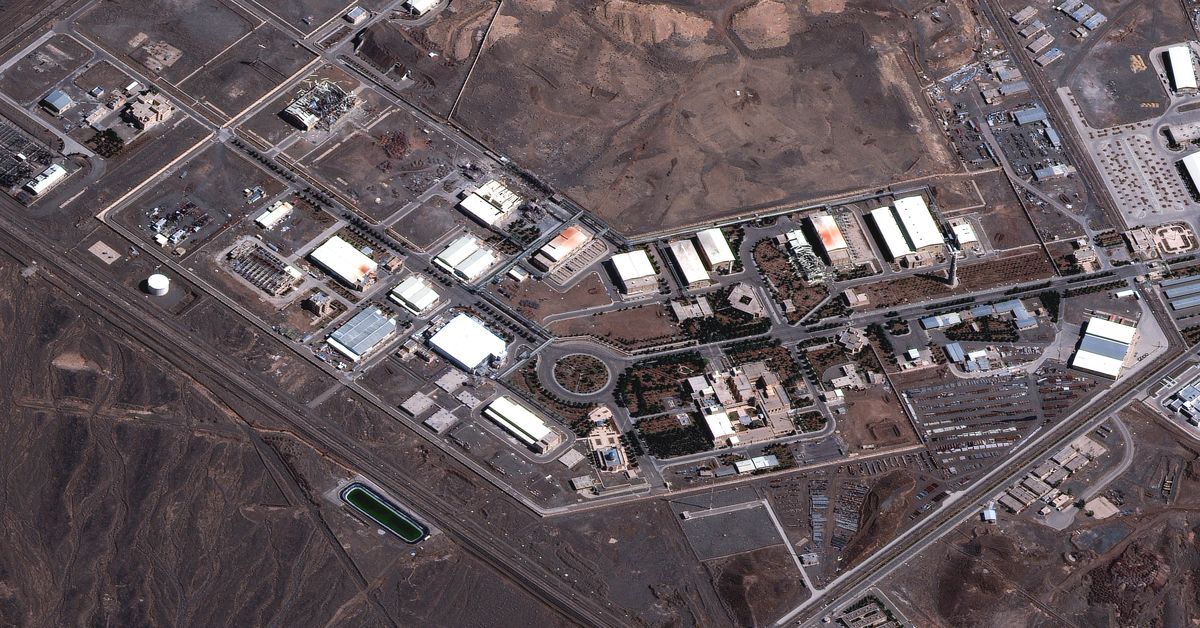
The strait has reopened, with President Trump celebrating a diplomatic achievement as Israel and Lebanon engage in a cautious ceasefire. However, a significant sticking point could reignite tensions between the parties involved. The United States is keenly interested in Iran’s uranium reserves, and Trump remarked in a recent interview that an “agreement” regarding this matter could be on the horizon.
As the situation unfolds, Iran has firmly stated that its enriched uranium stockpiles will remain untouched. In his CBS interview, Trump asserted there were no plans for US military intervention to seize these stocks, suggesting instead a cooperative approach: “We’ll go down and get it with (Iran), and then we’ll take it,” he mentioned. He emphasised the potential for a peaceful resolution, indicating that if negotiations proceed smoothly, “there’s no need for fighting when there’s an agreement.”
Trump indicated discussions between the US and Iran would occur over the upcoming weekend, hinting at optimism for progress. However, Iran quickly countered this optimism, denying the existence of any agreement and dismissing the notion of transferring uranium to the United States. Esmaeil Baghaei, an Iranian foreign ministry spokesperson, maintained that the country regards its enriched uranium as a vital asset, stating, “Iran’s enriched uranium is sacred to us like the soil of Iran.”
The contrasting positions of the US and Iran suggest that while diplomatic overtures are being made, the path to a lasting resolution remains fraught with uncertainty. Both nations appear to be at an impasse, with potential for future conflict if key issues, such as Iran’s uranium reserves, are not adequately addressed.