
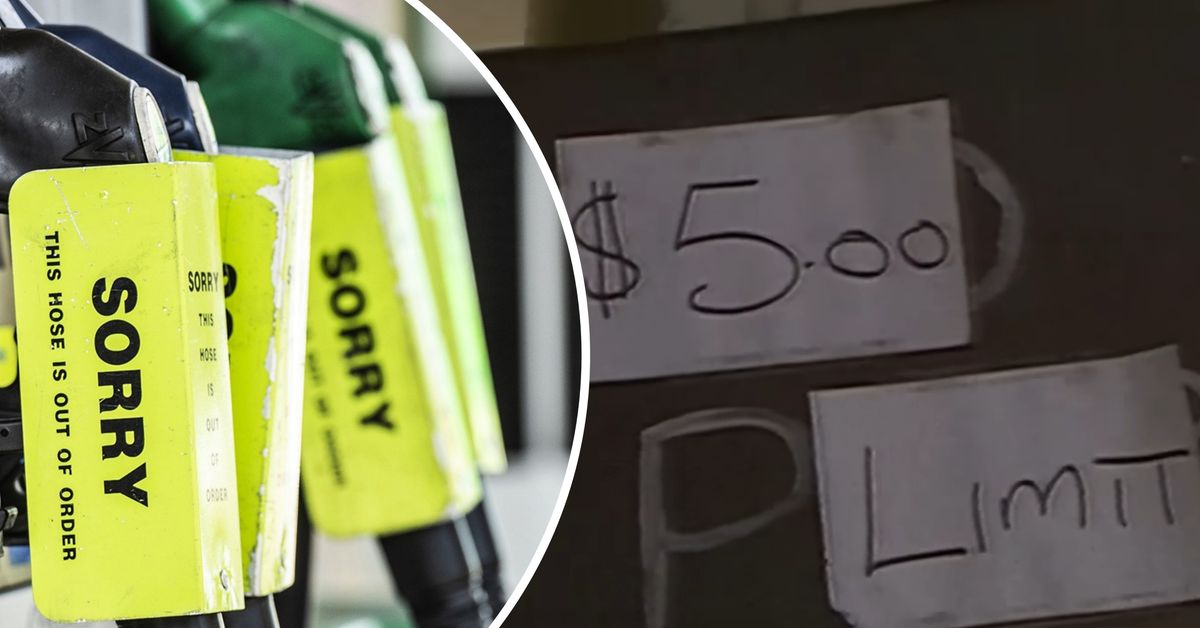
The Australian federal government is considering fuel rationing as a last resort in its national fuel security strategy amidst concerns of potential supply disruptions due to escalating conflicts in Iran. This fuel shortage echoes the 1979 crisis when a strike at the Caltex Kurnell refinery led to widespread panic-buying, particularly in New South Wales (NSW), prompting the Fraser government to implement rationing measures including an odd-even number plate system, restricting fuel purchases based on vehicle registration.
During that time, families like Daryl George’s, who lived in rural Victoria, found ways to sidestep the shortages thanks to adequate fuel reserves. He recalls how his family established a stockpile on their farm, allowing them to manage while others struggled. The emergency measures only lasted a few weeks before the crisis subsided, leading to the restoration of normal fuel supply.
In contrast, countries like Jordan have faced lengthy fuel rationing periods due to conflicts, such as Iraq’s invasion of Kuwait in the 1990s. Melbourne academic Hussein Dia shared his experience of stringent rationing in Jordan, highlighting how the government swiftly enforced fuel restrictions, mandating carpooling and introducing an odd-even system for fuel access. This affected daily life significantly, mandating the closure of businesses outside working hours and restricting government vehicles on the roads.
In Australia, concerns about shortages remain as the international fuel landscape fluctuates. The government has articulated that while rationing is considered the final step of its fuel security plan, current fuel stock levels are satisfactory, and officials are actively working to ensure supply security. Presently, Australia is operating under stage two of its fuel security strategy, which involves measures like underwriting fuel shipments and promoting public transport.
Energy Minister Chris Bowen reassures that efforts are ongoing to maintain supply and provide prioritisation for emergency services should the situation deteriorate. Stage three will introduce voluntary measures aimed at reducing fuel dependency, such as encouraging carpooling, while the prospect of rationing has not yet materialised but remains on the agenda.
As Australia grapples with rising fuel prices and imminent shortages, proactive measures are being enforced to mitigate further economic strain and prepare for unforeseen circumstances. The community is urged to remain resilient, knowing that the government is working diligently to prevent a repeat of the fuel crises of the past.