
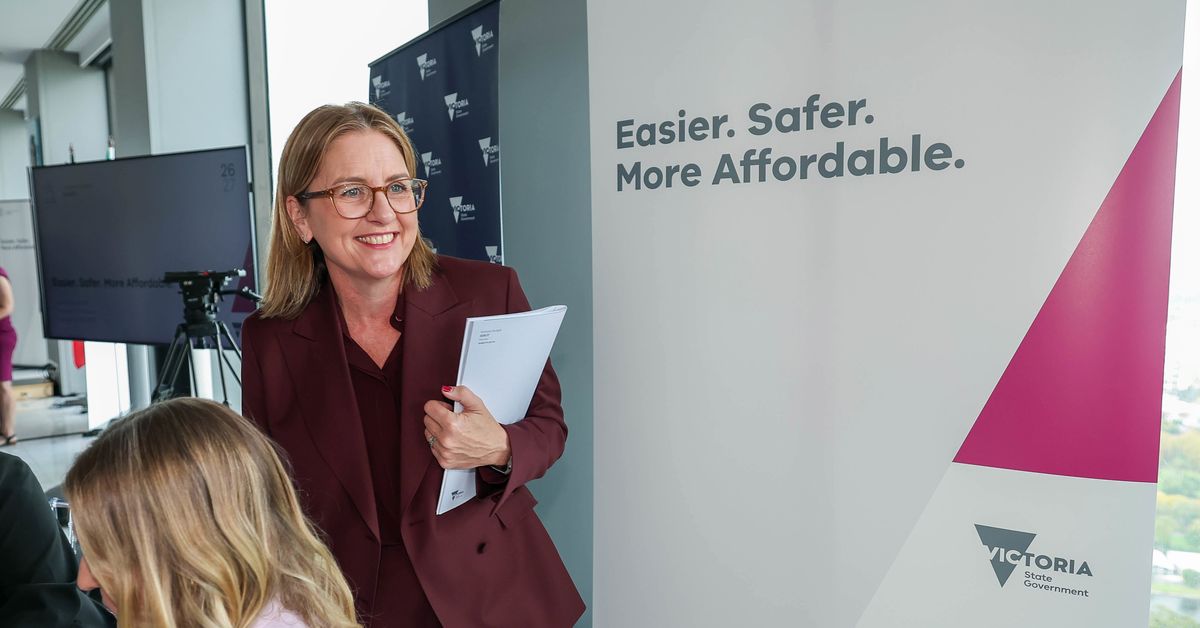
Today, Premier Jacinta Allan and Treasurer Jaclyn Symes revealed Victoria’s budget for 2026/27, marking the state’s first operating surplus in seven years. The budget presented a surplus of $727 million for 2025-26, with expectations of $1 billion for 2026-27, averaging $1.7 billion in surpluses over the forecast period.
Symes expressed pride in announcing the surplus during her address, attributing it to a record tax revenue and a $2 billion GST boost from the federal government. However, financial documents revealed that, factoring in project expenditures, Victoria’s annual spending exceeds its revenue by approximately $7 billion. This has raised concerns amid an upcoming election and prompted criticism from opposition members, who labelled the surplus a misleading “fake surplus.”
Critics, including Shadow Treasurer James Newbury, maintained that the state’s net debt is rapidly approaching $200 billion, projected to account for 24.4% of the state’s economy by 2030. This trajectory compares unfavourably to the $20 billion debt when the Coalition last held power in 2014, with ongoing implications for public spending.
Moreover, Victoria is facing an escalating interest payment bill, projected to swell from $6.774 billion in 2024/25 to $11.82 billion by 2029/30. Supporters of the budget, including Symes, argued that such borrowing is essential for building critical infrastructure and stimulating economic growth. She stressed that while debt may appear burdensome, it facilitates necessary developments for a productive society.
The budget forecast also included support initiatives like free public transport until the end of May and a 20% reduction in vehicle registration fees, funded by the surplus. However, it failed to address the financial implications of the proposed $34 billion Suburban Rail Loop, which relies on a combination of state, federal, and “value capture” funding, with concerns raised over the government’s plans for future debt recovery.
In pursuit of new revenue, the Allan government plans to eliminate the luxury vehicle duty concession, expected to increase state revenue by $12.6 million in 2027/28. Additionally, the budget anticipates a 15% rise in revenue from fines, projected to grow from $886 million in 2026/27 to $997 million by 2029/30.
Public sector wage figures are also set to soar, anticipated to exceed $41 billion next year, reflecting the government’s commitment to hiring additional teachers, healthcare professionals, and police officers. Symes reaffirmed the government’s backing of teachers and essential workers, underlining the intent to boost employment in these key areas.
In summary, while the budget presents a surplus for the first time in several years, significant challenges lie ahead, including a rising debt, increasing interest payments, and the long-term sustainability of its fiscal strategies.