
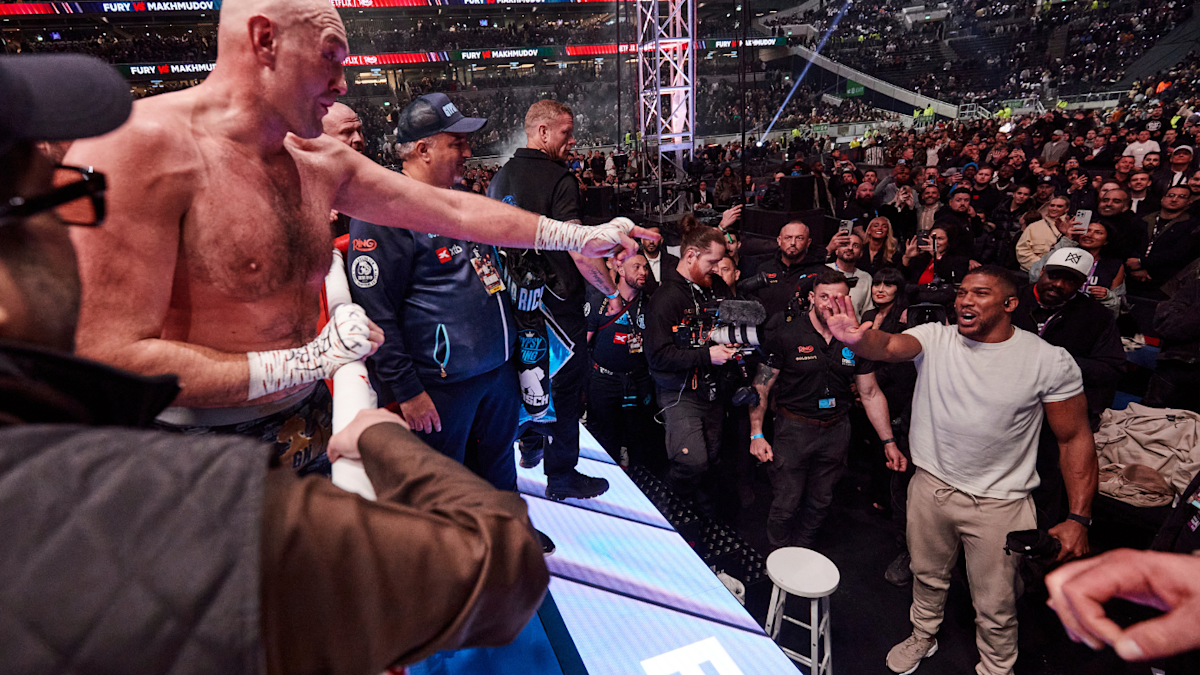
Matchroom’s Eddie Hearn has officially announced that Anthony Joshua will face Tyson Fury later this year, with the bout set to be streamed on Netflix. Hearn celebrated the news on Instagram, proclaiming, “Signed, sealed, delivered! AJ v Fury is on!”
Before his clash with Fury, the 36-year-old Joshua will take on Albanian fighter Kristian Prenga, who boasts a record of 20 wins and one loss, on July 25 in Riyadh. This match features prominently in “The Comeback,” part of the Esports World Cup Festival. The widely anticipated fight between Joshua and Fury is expected to take place at Wembley Stadium, where 90,000 fans could be in attendance.
While this matchup promises significant viewership, some critics point out that it’s a missed opportunity, as the fight is occurring later in both fighters’ careers. Joshua and Fury are no longer in contention for world titles, making this bout feel more like a spectacle for bragging rights than a serious championship fight.
Both fighters have experienced their peaks, previously battling Oleksandr Usyk, but their upcoming contest is likely to lack the gravitas of a title fight. Financially, promoters will benefit, but a showdown between the two British heavyweights would have generated far more interest had it occurred earlier in their careers.
Fury has held the heavyweight title at two points, first unifying the WBA, IBF, WBO, and IBO belts after defeating Wladimir Klitschko in November 2015. Joshua, too, has had his share of success, holding the same titles from 2017 to 2021. Critics argue that both boxers preferred to safeguard their titles rather than risk their legacies by facing one another sooner.
This situation has sparked discourse about the current state of boxing, particularly regarding the potential for a more centralized system akin to UFC’s model. If such a structure existed, fans could have witnessed Fury and Joshua at their prime, increasing satisfaction and market viability.
The boxing landscape is shifting, with Jake Paul’s rise to fame emphasising fights as entertainment rather than purely athletic contests. This transition is illustrated by the upcoming Joshua versus Fury fight, which leans heavily on the personalities involved rather than the stakes of a championship.
As Netflix’s influence within the sport grows, the focus may increasingly gravitate towards entertainment rather than competitive integrity. While they previously aired high-stakes matches like Crawford versus Canelo, a shift towards a model that prioritises star power over athletic accomplishments may emerge, reminiscent of WWE’s entertainment-driven approach. Ultimately, Joshua and Fury’s bout, a culmination of their storied careers, represents the blending of boxing with the entertainment industry’s demands.