
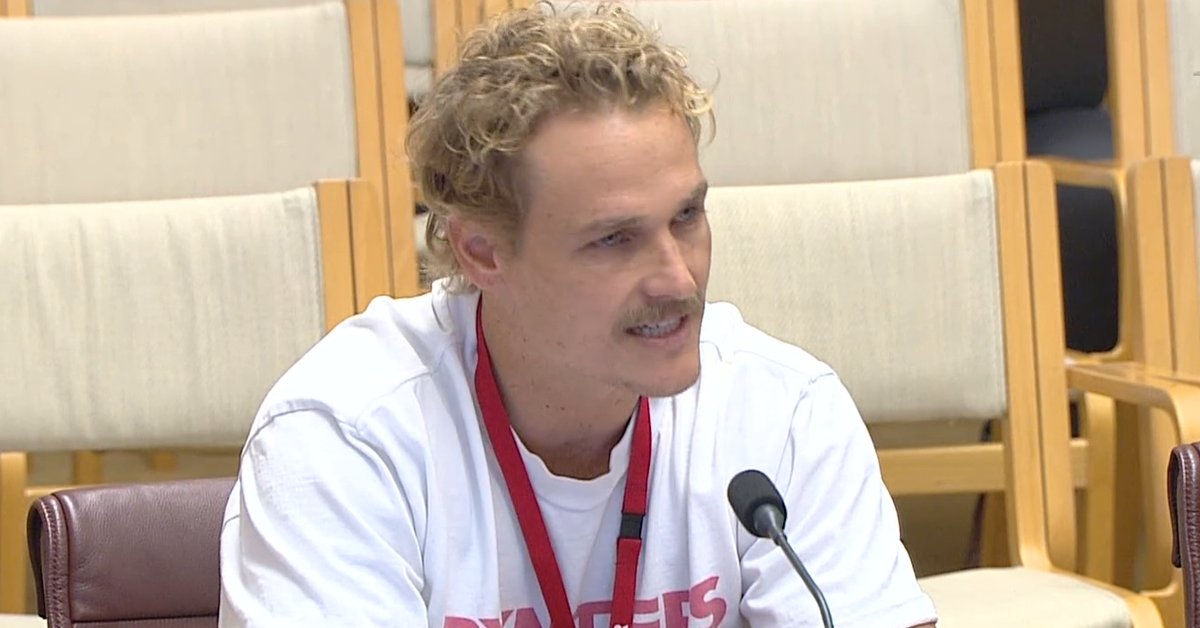
Konrad Benjamin, a former teacher and creator of the “Punter’s Politics” podcast, made headlines after addressing the Senate Select Committee on Taxation of Gas Resources. He garnered significant attention for his passionate statement, which he opened with a humorous remark about the usual cost of speaking to politicians, suggesting it typically runs at “$3000 a head.”
Benjamin’s primary concern was the inadequate return Australia receives from its natural gas resources compared to countries like Norway and Qatar. He highlighted the importance of ensuring that everyday Australians receive what is rightfully theirs, asserting that the government has been overly influenced by gas industry lobbyists. He addressed the growing awareness among Australians regarding the undervalued nature of their gas assets and the minimal taxation imposed on foreign corporations reaping the benefits.
He emphasised that while Australians struggle to make ends meet, foreign companies reap enormous profits from resources that belong to the country. Benjamin lamented that Aussies are effectively being “sold out” as they watch foreign nations profit immensely from their gas exports. He stressed the disparity in the benefits of their natural resources, questioning why Australia, with its wealth of resources, finds itself in such a precarious financial position.
With a critical eye, he pointed out the growing discontent among the public, noting that many are now aware of their right to a fair share of resource revenues. He drew a stark comparison with Norway, which uses its gas export taxes to fund a massive sovereign wealth fund for its citizens. In his view, the existence of “Punter’s Politics” is a clear indicator that the government needs to do better for its constituents.
Benjamin called on policymakers to remember the struggles of everyday Australians: nurses living in vehicles, teachers providing for underprivileged students, and tradespeople sacrificing meals for their families. He concluded by urging the government to shift focus from encouraging corporate interests to addressing the basic needs of its citizens, reminding them that while they pay taxes, they should not be denied access to their natural resources.
His remarks have sent ripples through the political landscape, amplifying calls for more equitable management of Australia’s gas resources, and pushing the conversation around government accountability to the forefront.