
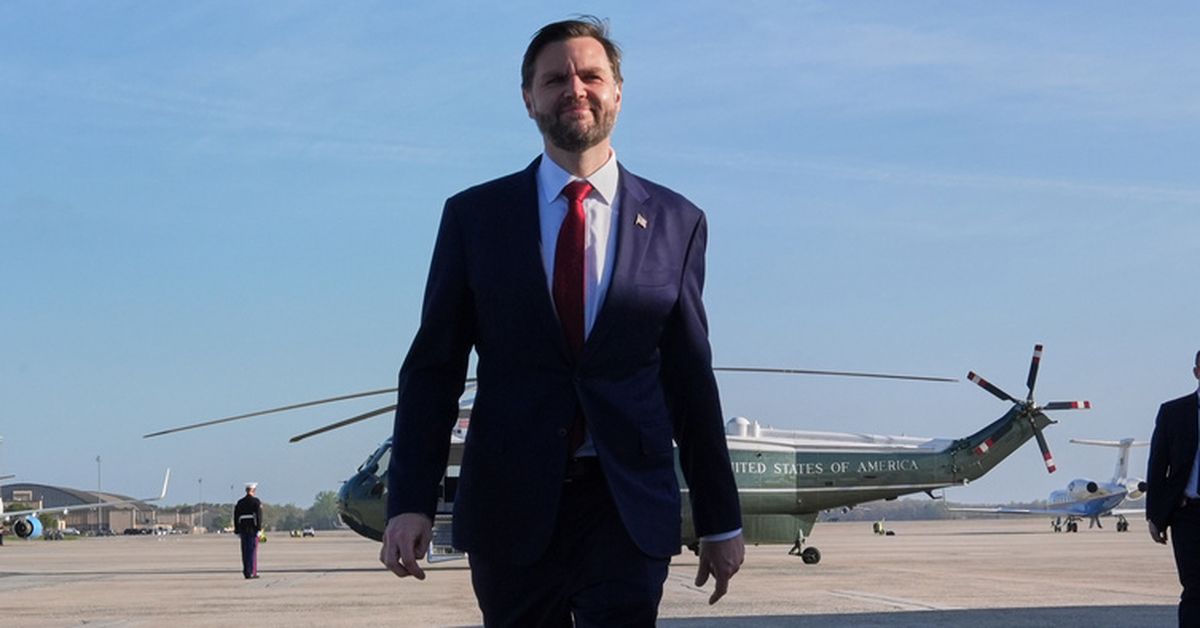
US Vice President JD Vance embarked on a journey to Islamabad on Friday to lead talks with Iran, emphasising that the US would not tolerate any attempts by Iran to manipulate the situation as negotiations unfold. This diplomatic mission comes amid a precarious ceasefire that appears to be on the verge of collapsing, with significant differences remaining between Iranian demands and those put forth by the US and Israel.
President Donald Trump has entrusted Vance, often sceptical of foreign military ventures, with this critical role in pursuit of a resolution to a six-week-long conflict with Iran. As Vance departed, he stressed the importance of good faith negotiations, stating, “If the Iranians are willing to negotiate in good faith, we’re certainly willing to extend the open hand.” Conversely, he warned against Iran attempting to “play us,” indicating that such tactics would be met with resistance from the US team.
Alongside Vance are key figures from Trump’s administration, including special envoy Steve Witkoff and Jared Kushner, who have previously participated in discussions focused on Iran’s nuclear programme and regional military activities. While details surrounding the nature of the negotiations have been sparse, Vance’s presence signals a rare high-level engagement with Iran since the 1979 Islamic Revolution.
Challenges abound as the two parties grapple with fundamental disagreements over the terms of the ceasefire. Iran insists that the cessation of hostilities encompasses the ongoing Israeli conflict in Lebanon, while the US has asserted otherwise, leading to continued military operations. Additionally, America demands Iran reopen the strategic Strait of Hormuz, previously closed in response to regional tensions.
With the stakes heightened for both Vance and Trump as political pressures mount domestically, the success of these negotiations could significantly impact future political aspirations. Vance, who served in Iraq and has held a brief Senate tenure, faces a daunting task with little diplomatic experience. Expert commentary from Jonathan Schanzer suggests that Vance’s scepticism of intervention may resonate with Iranian negotiators, but acknowledges that he will require substantial support to navigate such serious negotiations.
In the backdrop of these discussions, Vance also moves amid broader implications for his career and the administration’s reputation. Engagement in this conflict could leave him politically vulnerable, with potential fallout if negotiations falter. Conversely, success may bolster his standing as a significant player within the Republican party ahead of the 2028 presidential race.
As the complex dynamics unfold, the world watches closely, and the outcome of these talks might prove pivotal—not only for US-Iran relations but also for the future political landscape in America.