
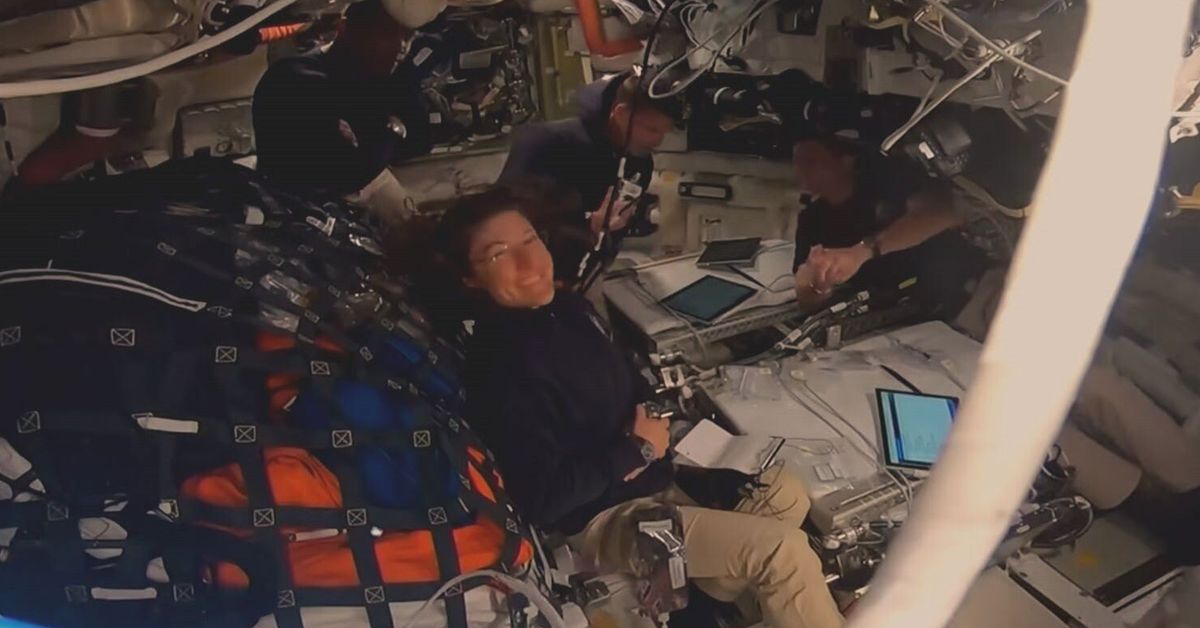
The astronauts of Artemis II made headlines early this morning as they became humanity’s most distant explorers, surpassing the Apollo 13 record for the furthest distance travelled from Earth. At approximately 4 am AEST, the crew, consisting of Jeremy Hansen, Reid Wiseman, Victor Glover, and Christina Koch, broke the previous milestone of 400,171 kilometres, initially set in 1970.
Hansen marked this significant achievement with a call to action, urging future generations not to let this record stand for long. He also requested that a newly discovered lunar crater be named in honour of mission commander Wiseman’s late wife, Carroll, who passed away in 2020 from cancer.
As they approached this historic distance, the astronauts reflected on their momentous journey with excitement. They were set to eclipse the Apollo 13 record by over 6,600 kilometres during their lunar flyby, which commenced this morning. The day began with a heartfelt wake-up message from Jim Lovell, the Apollo 13 commander, who passed away earlier this year.
Lovell welcomed the crew to the “old neighbourhood” of space and emphasised the importance of cherishing the experience. The Artemis II mission is notably employing a free-return lunar trajectory, reminiscent of the path taken by Apollo 13 after its oxygen tank malfunction. This route uses the gravity of the Earth and Moon to facilitate a safer journey back home without the need to land on the lunar surface.
The crew aims to come within about 6,500 kilometres of the Moon, reaching speeds of up to 5,052 km/h as they make a U-turn and return to Earth. They will communicate with Earth for approximately 45 minutes while at the mission’s maximum distance. This momentous flight will last about four days, culminating in a splashdown in the Pacific Ocean on Friday.
Throughout their training, the astronauts have meticulously studied lunar geography, prepared to observe the Orientale Basin and notable Apollo landing sites. They also aim to capture stunning images of celestial bodies, including Mercury and Mars, while experiencing a total solar eclipse from their vantage point beyond the Moon.
Artemis II marks NASA’s first crewed lunar mission since Apollo 17 in 1972 and paves the way for future missions, including Artemis III in the upcoming year, which will involve docking with lunar landers in Earth’s orbit. This mission is a significant progression towards a planned lunar landing with Artemis IV in 2028.
The crew’s journey is not only a remarkable technical achievement but also a profound reminder of humanity’s shared existence within the vast cosmos, an experience Glover poignantly reflected upon during this Holy Week.