
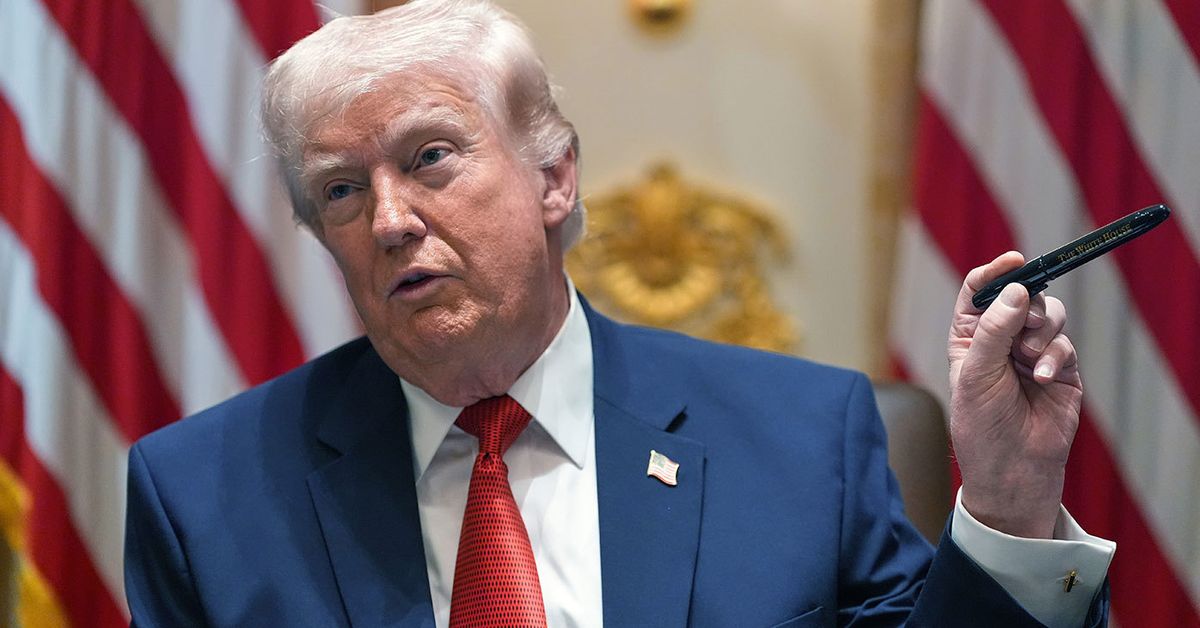
A recent poll conducted by the Australian Financial Review, in collaboration with Redbridge Group and Accent Research, reveals that a significant majority of Australians attribute the recent increase in fuel prices to former US President Donald Trump. The survey indicates that 61% of participants blame Trump for the hike, while only 14% hold the Australian government accountable.
This sentiment is echoed across various demographics, with the exception of One Nation supporters, who were more divided on the issue. Among this group, 39% blamed Trump, while 38% blamed the Labour party. The Labour party maintained a steady primary vote at 32%, whereas the Coalition experienced a decline, dropping two points to 17%. Notably, One Nation’s support surged to 29%.
In a recent address, Andrew Hastie, the Opposition spokesperson for industry and sovereign capability, directly addressed the implications of Trump’s policies, suggesting that Iran’s actions have placed a strain on the global economy. He described the current economic pain felt by voters as a significant challenge for political parties, emphasising the need for systemic change to avoid further backlash from groups like One Nation.
Hastie highlighted that the rise in support for One Nation has altered the political landscape, with Labour now competing directly against them rather than the Coalition in the preferred voting scenario. Despite this shift, Labour retains a strong lead with a two-party preference of 53% compared to One Nation’s 47%.
As Parliament reconvenes this week before a lengthy break leading to the budget, the government is reportedly finalising its financial strategies. In the meantime, a national cabinet meeting is set to focus on strategies for addressing the ongoing fuel crisis, underscoring the urgency of the situation.
As discussions unfold, it is expected that the government’s response to fuel prices will be closely scrutinised, particularly in light of the political ramifications highlighted by the poll. For many Australians, the connection between international events and domestic issues remains an essential topic of discourse.