
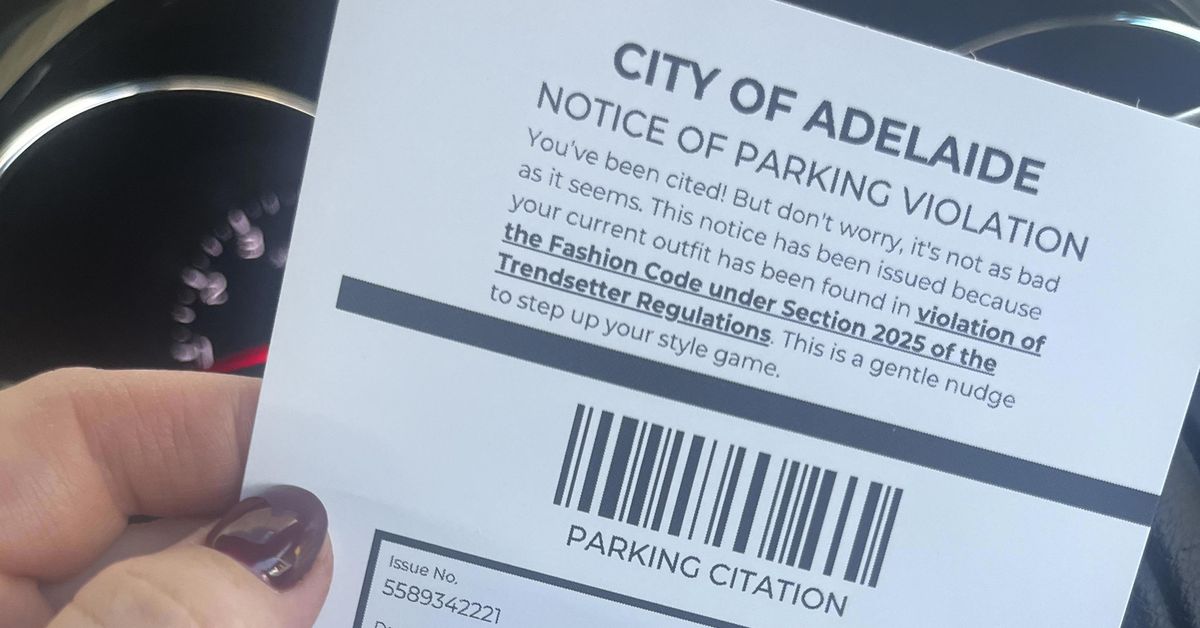
In Adelaide, a local business has caused quite a stir among motorists by distributing promotional flyers that mimic parking fines. Shirley, a resident who parked at Tea Tree Plaza in Modbury, returned from her dental appointment to find a notice under her windshield wiper, which, at first glance, appeared to be an official parking ticket from the City of Adelaide.
Upon closer inspection, the document was revealed to be an advertisement for a local clothing store. The flyer bore the playful message, “You’ve been cited! But don’t worry, it’s not as bad as it seems.” It further claimed that the recipient was in violation of a fictional Fashion Code and suggested they upgrade their style. Included was a QR code linking to the apparel shop’s online platform, allowing customers to browse their collection.
Many individuals took to social media to share their reactions, including one user who recounted almost losing their composure upon discovering the fake fine, especially during an already challenging day. This tactic of using deceptive notices for promotional purposes is not entirely new; a burger chain in Melbourne previously used a similar approach, putting faux parking tickets on cars that turned out to be vouchers for free burgers.
However, the legality of this marketing strategy is questionable. According to the Protection of the Environment Operations Act 1997, it is illegal to place advertising materials on vehicles without consent. In fact, the maximum penalty for such an infringement could be a fine. The City of Adelaide specifically prohibits unsolicited advertising on vehicles, enforcing regulations to deter littering and maintain urban aesthetics.
As the trend continues, it’s important for consumers to be cautious and vigilant when encountering unexpected notices on their vehicles. While it can be a clever marketing ploy, the potential legal ramifications and the risk of causing distress to drivers should not be underestimated. Ultimately, businesses must balance innovative advertising techniques with a responsibility to the community and local laws.