
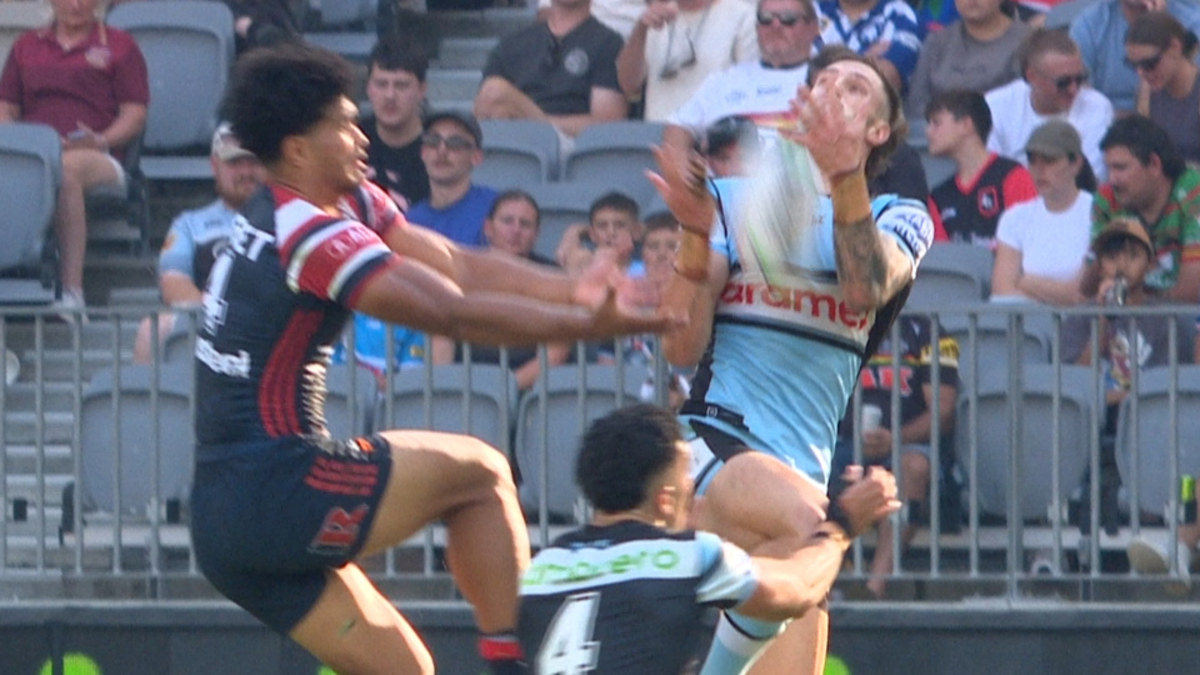
The contentious disruptor rule came into focus during an NRL match between the Roosters and Sharks in Perth, as a try by Robert Toia was disallowed. Late in the second half, a dropped kick by Sam Stonestreet led to a potential score for the Sharks, which would have narrowed the gap to 16-10. However, the Bunker intervened, declaring the attempt a no try due to Toia’s earlier contact with Stonestreet.
This decision was met with widespread boos from the crowd at Optus Stadium, leaving Roosters’ coach Trent Robinson and Michael Cheika visibly baffled. Roosters captain James Tedesco was particularly vocal, arguing that the call was made with excessive scrutiny, highlighting that the contact was minimal and the ball had not clearly entered a catching position. Commentator Greg Alexander echoed Tedesco’s sentiments, expressing doubt over the ruling, as he described the interaction as a mere fingertip touch.
Following the disallowed try, the game saw an immediate shift in momentum, with Tom Hazelton scoring for the Sharks shortly after. Alexander took the opportunity to reference another recent disruptor-related decision, asserting that the inconsistency surrounding such calls remained troubling.
At half-time, former Roosters star Cooper Cronk voiced his disapproval of the Bunker’s intervention, suggesting that calling a fingertip touch a disruption undermines the capabilities of elite players. He asserted that such softness in officiating should not overshadow the skill required for catching a ball in high-pressure situations, stating, “It’s part of an outside back’s job to catch.”
Ultimately, while the disrupted try became a talking point, it did not prevent the Roosters from achieving a 34-22 victory. The incident has reignited discussions concerning the disruptor rule and its implications on the game, leaving supporters and analysts debating the efficacy and fairness of such officiating decisions.