
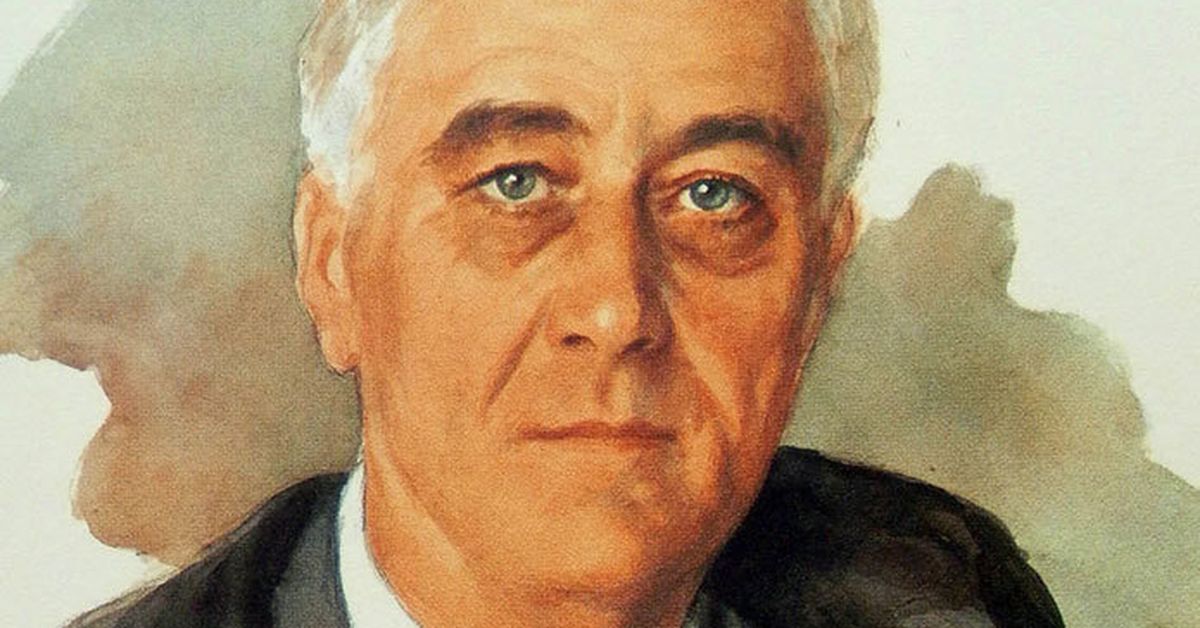
During a portrait session with watercolour artist Elizabeth Shoumatoff, President Franklin D. Roosevelt suddenly complained of a severe headache and subsequently lost consciousness due to a massive cerebral haemorrhage. The tragic event occurred as Shoumatoff was creating the painting, which ultimately remained unfinished. She later completed another version from her memory. Both portraits are displayed together in Warm Springs, Georgia, where Roosevelt passed away.
Roosevelt’s declining health had been largely concealed from the public for many years. Very few Americans were aware that he relied on a wheelchair due to a condition widely believed to be polio. In the year prior to his death, his health deteriorated significantly, leading him to fear the possibility of resigning from the presidency.
Despite these challenges, Roosevelt sought re-election in 1944 for an unprecedented fourth term, asserting no one else could fulfil the role as effectively. He replaced his previous vice president, Henry Wallace, with Harry Truman, a decision made with little personal familiarity; the two men had only met briefly a couple of times during Truman’s time in office.
Upon Roosevelt’s passing, Truman, who had been vice president for only a brief period, was sworn in as the new president on the same evening. He had been kept in the dark about Roosevelt’s serious health issues and was only informed about the existence of the atomic bomb on the day of Roosevelt’s death. This sudden transition marked a significant turning point in American history.