
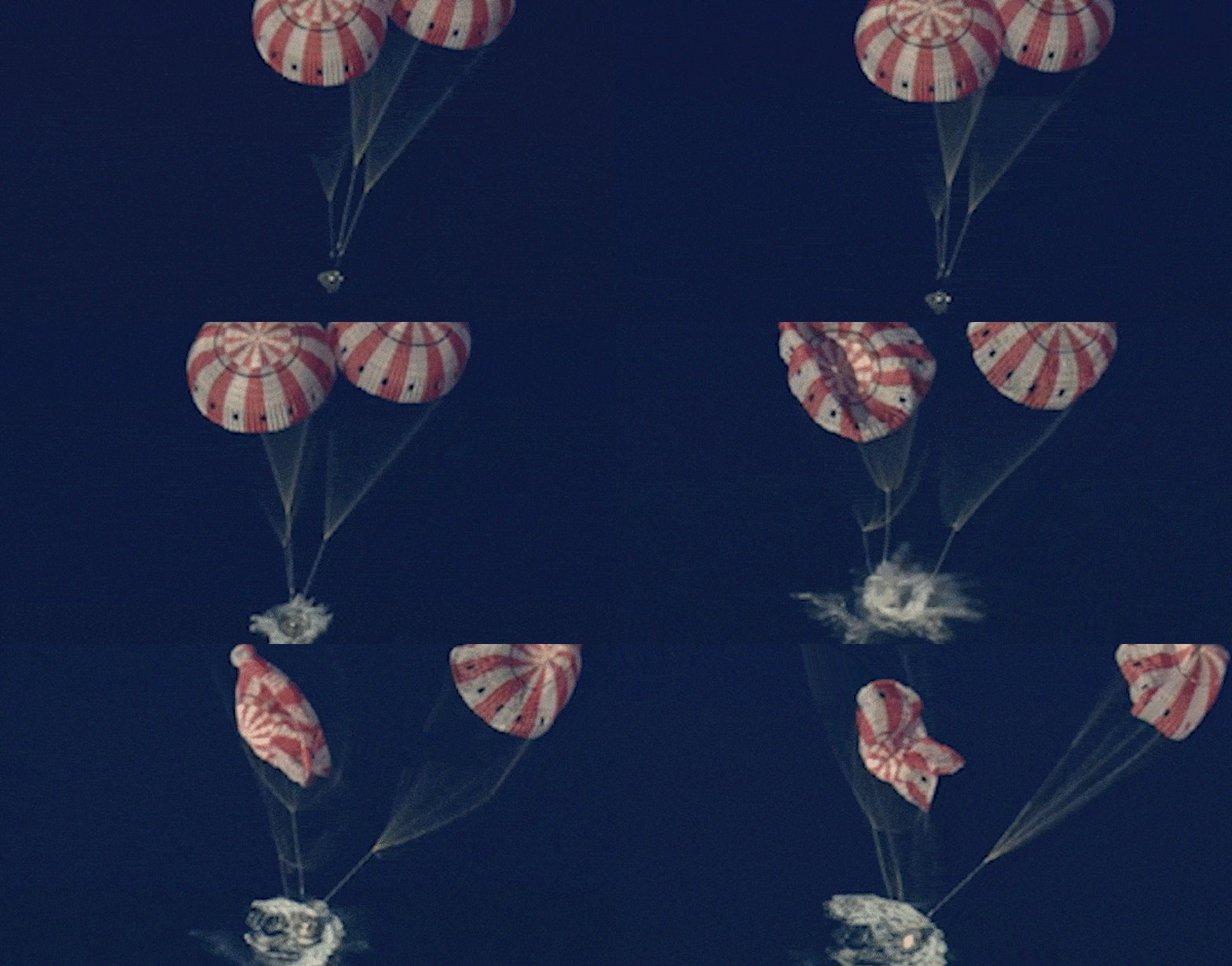
On Friday, the astronauts of Artemis II returned to Earth with a spectacular splashdown in the Pacific, marking humanity’s first trip to the moon in over 50 years. The crew, consisting of Commander Reid Wiseman, pilot Victor Glover, Christina Koch, and Canadian astronaut Jeremy Hansen, made history during their mission, which not only provided unprecedented views of the moon’s far side but also allowed them to experience a total solar eclipse.
Travelling at an astonishing speed of Mach 33—33 times the speed of sound—the crew’s Orion capsule, named Integrity, re-entered Earth’s atmosphere on autopilot. Anticipation grew in Mission Control as the capsule faced extreme conditions during peak heating and a communication blackout.
The successful splashdown followed a carefully orchestrated procedure, with the heat shield of Integrity withstanding intense temperatures. The astronauts’ families celebrated in Mission Control as the capsule re-established communication just before landing, reminiscent of Apollo 17’s last crewed lunar return in 1972.
Launched on April 1, the mission achieved remarkable milestones, breaking Apollo 13’s distance record by reaching 406,771 kilometres from Earth. Though Artemis II did not land on or orbit the moon, it set the stage for future lunar exploration and established a foundation for a sustainable lunar presence.
The crew also documented sights on the lunar far side that had never been observed by humans before, culminating in a breathtaking total solar eclipse. Glover expressed how the eclipse left a lasting impression on them, highlighting the beauty of their discoveries during this historic flyby.
In addition to their scientific achievements, the crew faced technical challenges, including issues with drinking water and propellant systems, as well as temporary toilet troubles that forced them to improvise. However, the astronauts took these challenges in stride, acknowledging that the discomforts were part of advancing human exploration.
Looking forward, the Artemis program aims to send astronauts to the moon’s south pole by 2028, with upcoming missions planned for testing docking procedures and landing protocols. Wiseman expressed hope that their journey would cause people to reflect on the beauty of Earth, reminding everyone to appreciate our special place in the universe.
Artemis II captured global attention and support, earning praise from notable figures, including US President Donald Trump and former Canadian Prime Minister Mark Carney, emphasising the mission’s significance in the ongoing quest for knowledge about the moon and beyond.