
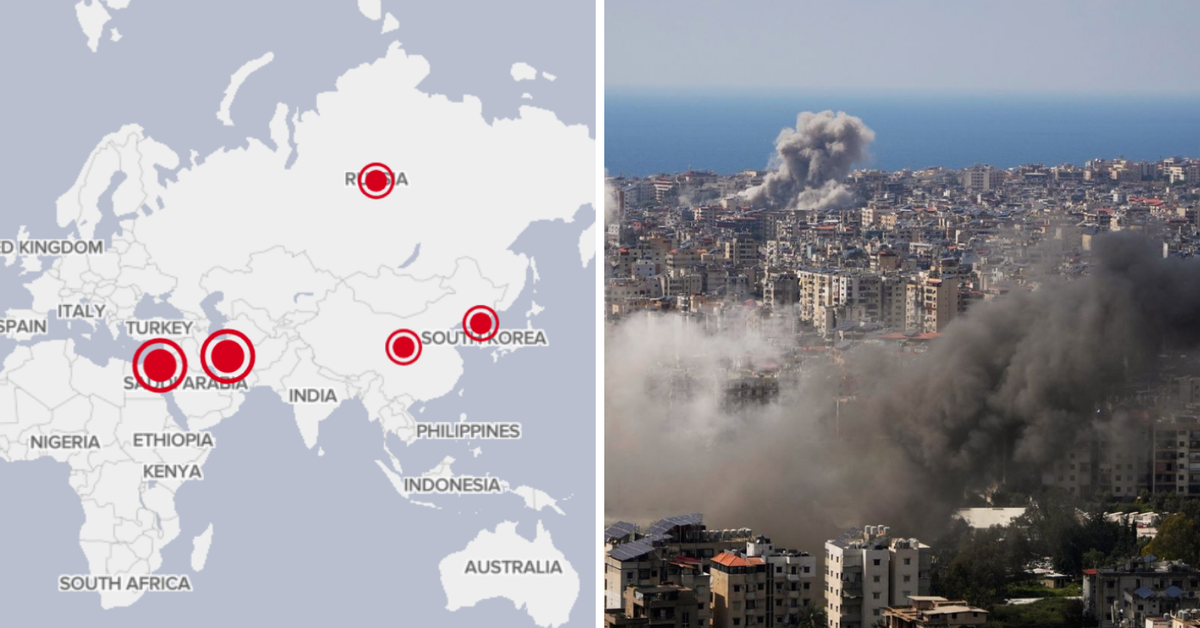
The current global climate is fraught with tensions, ranging from the US-Israeli conflict in Iran and Israel’s military actions in Gaza to Russia’s ongoing invasion of Ukraine and various disputes in Africa. These developments have raised concerns about the possibility of a new world war. Following World War II, the United Nations was founded to uphold peace and prevent future conflicts, yet the actions of world leaders today often contradict these objectives, and military alliances like NATO appear to be weakening.
In particular, escalating threats from former US President Donald Trump towards Iran, along with Iran’s retaliatory measures across the Middle East, have perpetuated conflict since February 28. While the idea of a third world war looms, defining such a war remains complex. The UN avoids a formal definition, but dictionaries offer various interpretations, suggesting a war involving multiple nations with major military forces.
David Kilcullen, an experienced strategist and former Australian military officer, notes that a world war typically comprises overlapping conflicts across various continents, engaging the same combatants. He warns that the potential for an expansion of current conflicts could indeed lead us closer to a world war, especially if they intertwine with Russia’s aggression against Ukraine or if nations like China or North Korea choose to exploit the situation for their strategic gains.
Kilcullen reflects on how historical context often obscures whether we’re in a world war until after it has unfolded. For instance, World War II initially appeared as a European conflict until it was expanded by significant events, such as Hitler’s invasion of Russia and Japan’s attack on the US.
Ray Dalio, a prominent investor and analyst, claims that we are already at a critical point in a multi-theatre conflict that could escalate. He lists the steps leading to a world war, including increasing military engagements, heightened demands for internal support, and inevitable military confrontations among major powers.
Regarding Australia’s position, Prime Minister Anthony Albanese has dispatched military capabilities to the Middle East, although he insists the nation is not directly involved in offensive operations. Despite Australia’s geographical distance from conflicts, Kilcullen emphasises that global trade interdependencies would prevent complete detachment from a potential world war.
Should China decide to invade Taiwan, the stakes for Australia could rise significantly, drawing the nation into conflict. Kilcullen predicts that a Chinese move could happen as soon as April of next year, indicating that the world must prepare for the possibility of a major conflict on the horizon.