
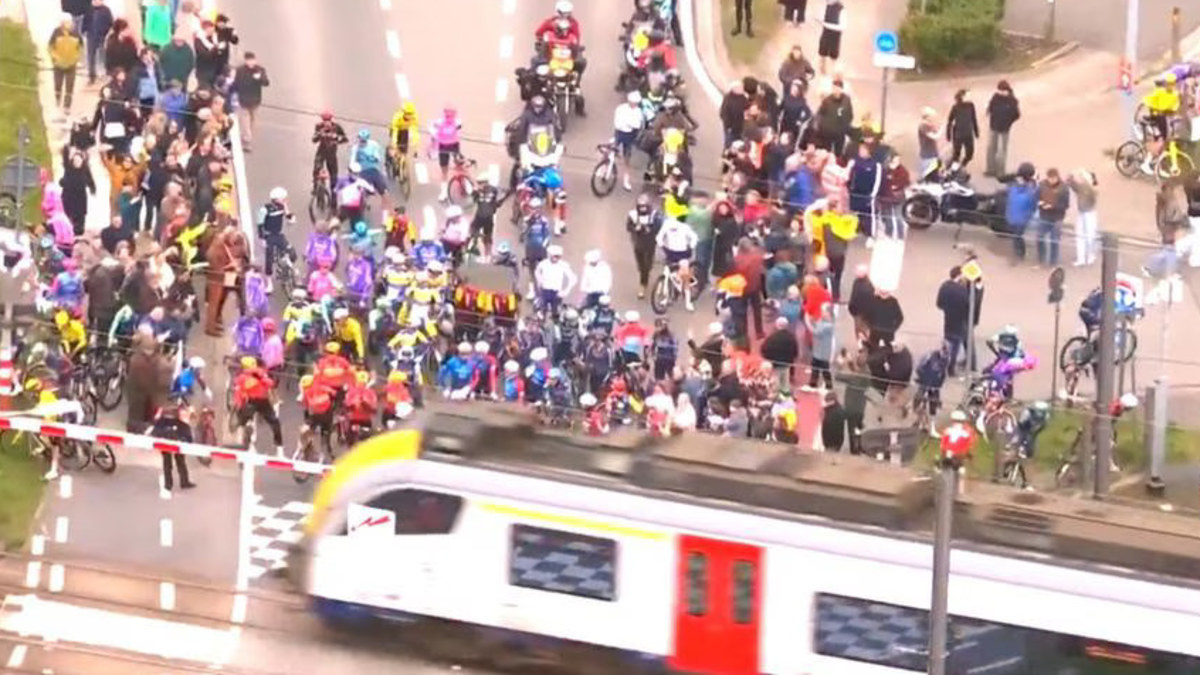
During the Tour of Flanders, an unexpected incident involving an approaching train disrupted the race, prompting organisers to intervene in front of the peloton to halt the cyclists. Approximately 20 riders at the front, including Tadej Pogacar—who ultimately won the event—ignored the red lights and continued racing to catch the breakaway group.
As a result, these riders are now facing potential fines for violating road safety regulations. The East Flanders public prosecutor’s office has announced they will identify the offenders and take appropriate action for breaching UCI rules, which state that cyclists must stop at red signals, with penalties including removal from the race for those who don’t comply.
The cyclists delayed by the train lost up to two minutes to those who went through the gates. This incident has raised questions regarding the race organisers’ decisions, particularly their initial stance not to penalise the riders who broke the rules. Although cyclists who passed the train were instructed to slow down and allow the rest of the peloton to catch up after the train had passed, they were ultimately permitted to resume the race uninterrupted.
Pogacar, now boasting 12 Monument victories—second only to the legendary Eddy Merckx—expressed that he was somewhat befuddled during the moment. He initially thought the organisers signalling for a stop might indicate a protest, a common occurrence in cycling events. “How can you stop in one second?” Pogacar questioned, reflecting on the suddenness of the situation. He suggested that the decision-making could have been managed differently, proposing that the breakaway group should have been halted as well to ensure a fair restart.
Despite the chaos, Pogacar ended the race with no further complaints, and his victory adds to his illustrious cycling career. The broader implications of the incident, however, highlight the complexities of managing safety and competition within the sport.