
In a daring operation, an American airman found himself hiding in a mountain crevice after his fighter jet was shot down over Iran. Faced with injuries and surrounded by enemy territory, his immediate goal was clear: survive and evade capture. Despite the daunting altitude of over 2000 metres, he managed to climb to a ridgeline, armed only with a pistol and minimal communication gear.
Realising the need for assistance, a team of American commandos coordinated by aircraft bombarded the area to locate the stranded officer. The operation involved hundreds of US military and intelligence personnel, including special forces and CIA operatives, who executed a highly secretive rescue mission. They cleverly misled Iranian forces to ensure the airman’s safety prior to the extraction.
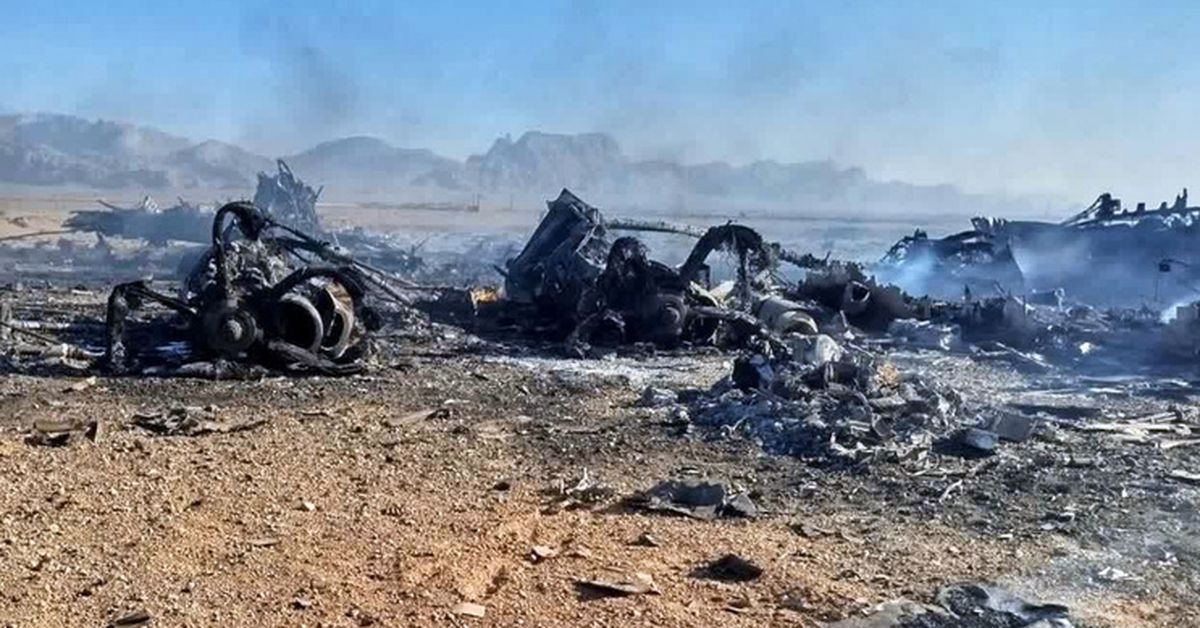
The mission was not without its challenges, as two American aircraft had to be destroyed on the ground in Iran to prevent them from falling into enemy hands. President Trump, who was monitoring the event closely from the White House, celebrated the successful recovery of the airman on social media, calling it one of the most daring search and rescue operations in US history.
The urgency to find the missing crew member intensified after the fighter jet’s downing on a Friday. While the pilot was quickly located, the whereabouts of the weapons systems officer remained a mystery. After ejecting from the aircraft and sustaining injuries, he took refuge in a crevice, managing sporadic communication with military contacts.
As the operation unfolded, Trump remained in constant contact with military leaders, providing updates on the situation. Meanwhile, in a strategic move, American intelligence circulated misinformation in Iran to deceive the Islamic Revolutionary Guard Corps about the status of the missing officer. Israel also contributed by delaying their planned military strikes to avoid complicating the search efforts.
Ultimately, the CIA pinpointed the airman’s location, crucially aiding the military’s rescue efforts. As special operations forces moved in on the area, aerial strikes ensured that Iranian troops could not reach the airman first. However, the operation faced further complications when the initial extraction aircraft were damaged, leading to a swift decision to send new planes instead of risking potential capture.
Days after the operation, Trump acknowledged the airman’s bravery and injuries, revealing details of the treacherous circumstances surrounding his rescue from deep within the Iranian mountains. He hailed the operation as a remarkable display of skill and courage by the involved personnel, underscoring the successful execution of the mission under perilous conditions.