
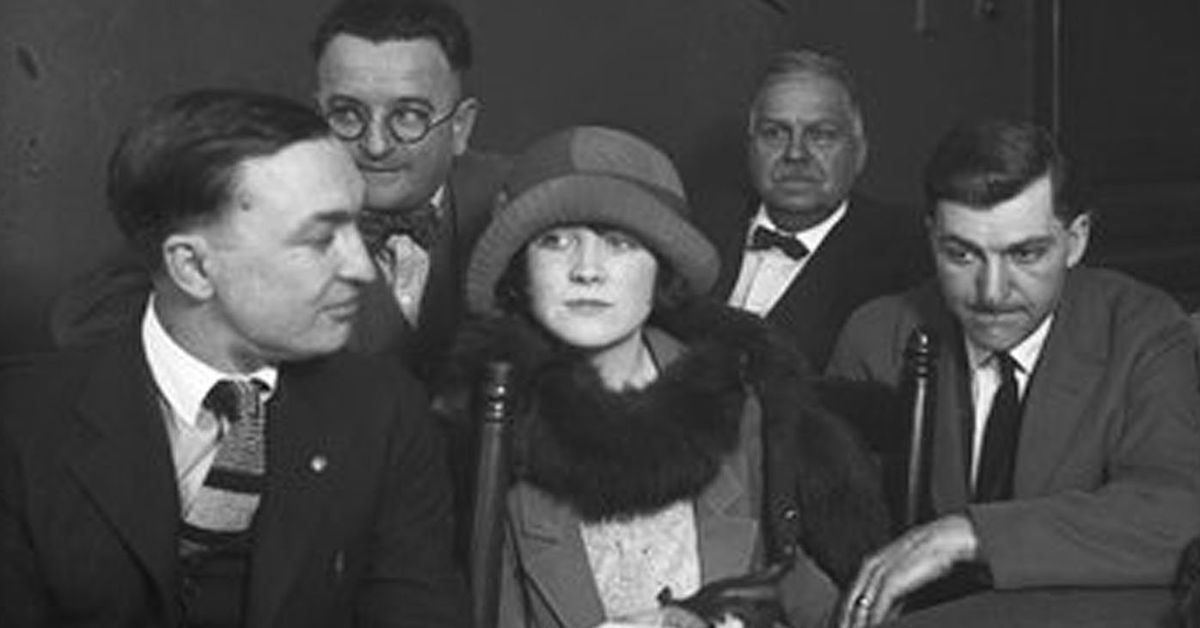
Beulah Annan found herself at the centre of a controversial case after admitting to the fatal shooting of her lover, Kalsted. During police questioning, she recounted a volatile argument that escalated, prompting both individuals to reach for a revolver. Ultimately, Annan was the one who gained control of the firearm first.
In a state of panic, fearing that neighbours may have heard the gunfire, she decided to cover her tracks by playing a jazz record. It wasn’t until she contacted her husband that the authorities were alerted; he called the police upon returning home. Throughout the interrogation, detectives remarkably failed to inquire about her motivation for the shooting, a gap that later hindered the prosecution’s case as they struggled to present a coherent narrative regarding the incident’s motive.
Despite the serious nature of the accusations, the court ultimately acquitted Annan, allowing her to walk away from the proceedings without a conviction. Her husband provided support during the trial but the relationship deteriorated soon after, resulting in a separation. Annan’s subsequent marriage was fleeting, lasting merely three months.
The event garnered considerable media attention, inspiring a play that eventually evolved into a silent film, which was further adapted into the popular musical “Chicago.” This musical, celebrated across many platforms, was later transformed into a film in 2002, which won the Academy Award for Best Picture.
The case of Beulah Annan remains a significant cultural touchstone, illustrating the intersection of crime and society in early 20th-century America and continuing to influence artistic representations to this day.