
Iran has intensified its missile attacks on Israel and several Gulf Arab states, underscoring its capacity to strike neighbours amidst claims by U.S. President Donald Trump that the Iranian threat has significantly diminished. These assaults, combined with Iran’s control over the strategic Strait of Hormuz, have disrupted global energy supplies, marking a precarious advantage for Tehran in the ongoing conflict.
In response to the hostilities, the UK has organised a discussion with nearly 35 nations regarding the reopening of the Strait post-conflict. Trump, asserting that military action against Iran has been effective, encouraged nations reliant on oil from Hormuz to assert control over the strait, although he stated it isn’t solely America’s responsibility.
Before the conflict escalated on February 28, the Strait was a crucial transit route through which 20% of the world’s traded oil flowed. Despite Trump’s assertions of Iran’s diminished threat, Iranian military officials claimed the country’s military capabilities remain robust, stating that targeted facilities from U.S. strikes are negligible in the grand scheme.
As Trump addressed the nation, explosions reverberated in Dubai as air defences attempted to intercept incoming missiles. Almost simultaneously, Israel’s military activated its defences in response to an Iranian missile barrage, highlighting the ongoing volatile atmosphere. The strikes persisted across Iran, including a notable attack on Beirut, Lebanon, attributed to Israel, resulting in multiple fatalities amidst ongoing confrontations with Iran-backed militant groups like Hezbollah.
The human toll from the hostilities has been staggering; in Iran alone, over 1,900 lives have been lost, with additional fatalities reported in Israel and Gulf states. The conflict has led to significant displacement, particularly in Lebanon, where over 1,200 are reported dead and a million displaced.
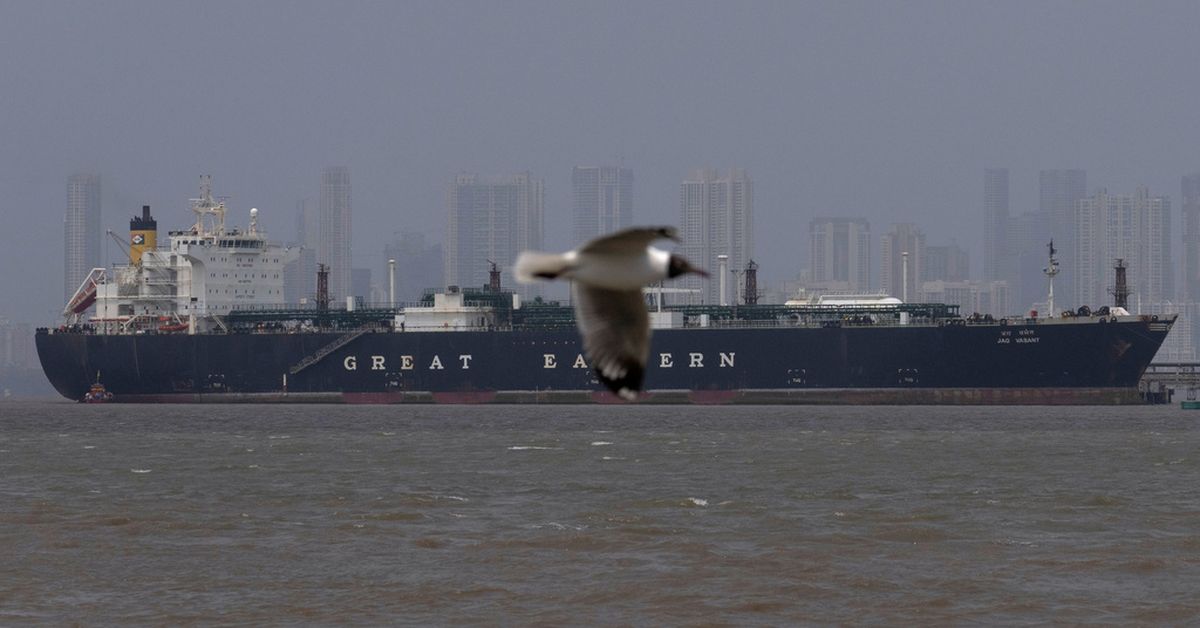
Iran’s tactical assaults on commercial maritime vessels have severely decreased traffic through the Strait, with a 94% reduction since March compared to the previous year. To sidestep Hormuz, nations like Saudi Arabia and Iraq have begun alternative transport routes for oil.
The coalition of 35 countries discussing the Strait’s security included most G7 nations, excluding the U.S., alongside regional players like the UAE and Bahrain. While military plans are being formulated, consensus stands against employing force amidst ongoing fighting. Concerns linger about Iran’s potential to restrict maritime traffic even after hostilities cease.
The conflict’s ripple effects continue to escalate global oil prices, threatening economic stability. With Brent crude oil prices soaring to $108 per barrel, the situation compounds existing global supply chain challenges, affecting everything from fuel to food costs. Japan and South Korea were the only Asian nations partaking in discussions on restoring traffic through the critical waterway, reflecting the immediate need for resolution amid the turmoil.
In summary, the situation presents a complex tangle of military aggression, economic repercussions, and international diplomacy, as countries navigate the precarious balance of security and trade in a turbulent geopolitical climate.