
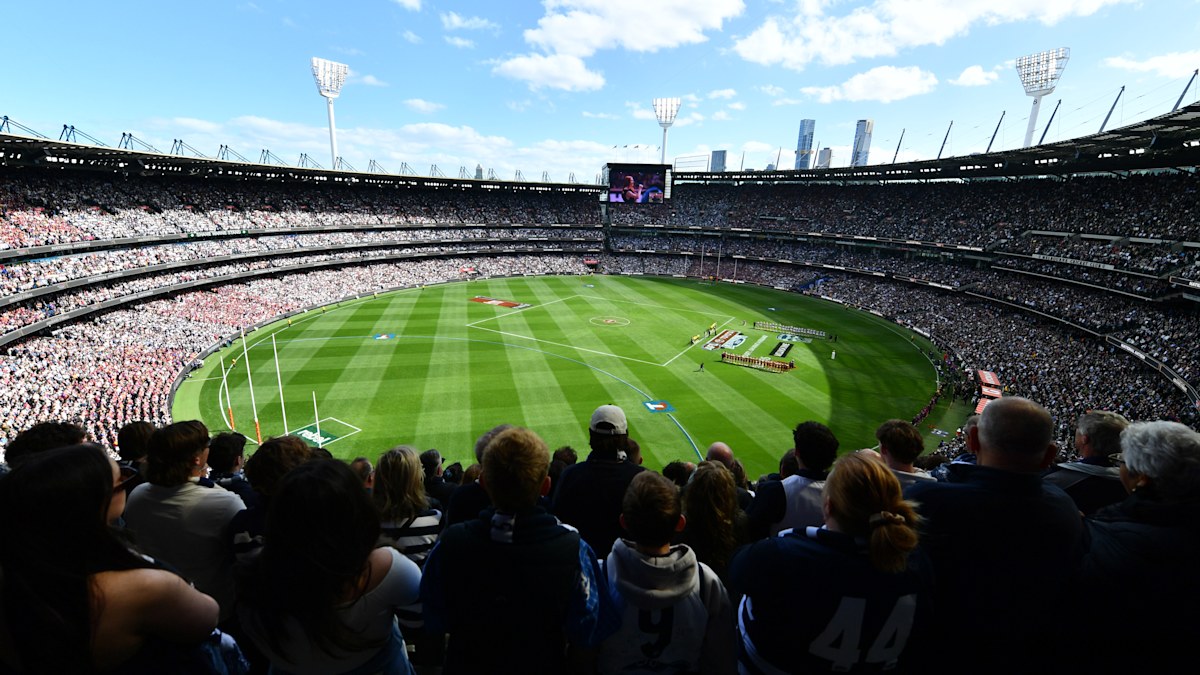
Eddie McGuire has voiced his concerns over the AFL’s decision not to change the start time of the grand final to a twilight or night event, maintaining the 2.30pm slot for the 2026 and 2027 matches. This decision comes despite considerable speculation about a potential shift, especially in light of Kylie Minogue’s performance this year, which many thought could prompt the change.
Historically, fans have shown a preference for tradition and, as a result, the AFL remains committed to its established afternoon start time. Rhett Bartlett, an AFL historian and son of Richmond icon Kevin Bartlett, has echoed this sentiment via social media, indicating fan support for maintaining traditions.
Conversely, McGuire argues that the AFL is missing an opportunity to boost viewership by not scheduling later start times that could attract a larger audience, particularly in regions like Sydney and Brisbane. He highlighted the NRL grand final’s success in 2025, where it outperformed the AFL’s grand final for the first time in a decade.
McGuire believes that the AFL’s current scheduling does not adequately cater to emerging markets such as New South Wales and Queensland, where Saturday afternoons are typically less favourable for football viewership. He remarked that the decision to schedule significant matches in the afternoon appears to be a populist move that prioritises short-term audience support rather than a strategic long-term vision for the game.
Gerard Whateley, a seasoned commentator, supports McGuire’s stance, arguing that by sticking to traditional afternoon start times, the AFL risks losing ground to the NRL in television ratings. He noted that had last year’s AFL grand final shifted to a twilight slot, it likely would have outperformed the NRL final, suggesting that the current scheduling approaches create an unnecessary competitive disadvantage. Whateley observed that ratings data from the past year indicates the NRL is outpacing the AFL in primetime viewership.
Furthermore, Garry Lyon, another prominent figure in the sport, pointed out that the AFL’s choice of fixtures, which has featured subpar teams in key timeslots, has not helped the league’s case. With high-profile teams like Carlton and Richmond being scheduled for primetime appearances, the league’s ability to capture audience interest remains in jeopardy.
In summary, while maintaining the traditional afternoon grand final may appease some fans, critics like McGuire believe the AFL’s decision-making process needs a fundamental rethink to secure its future in a competitive television landscape.