
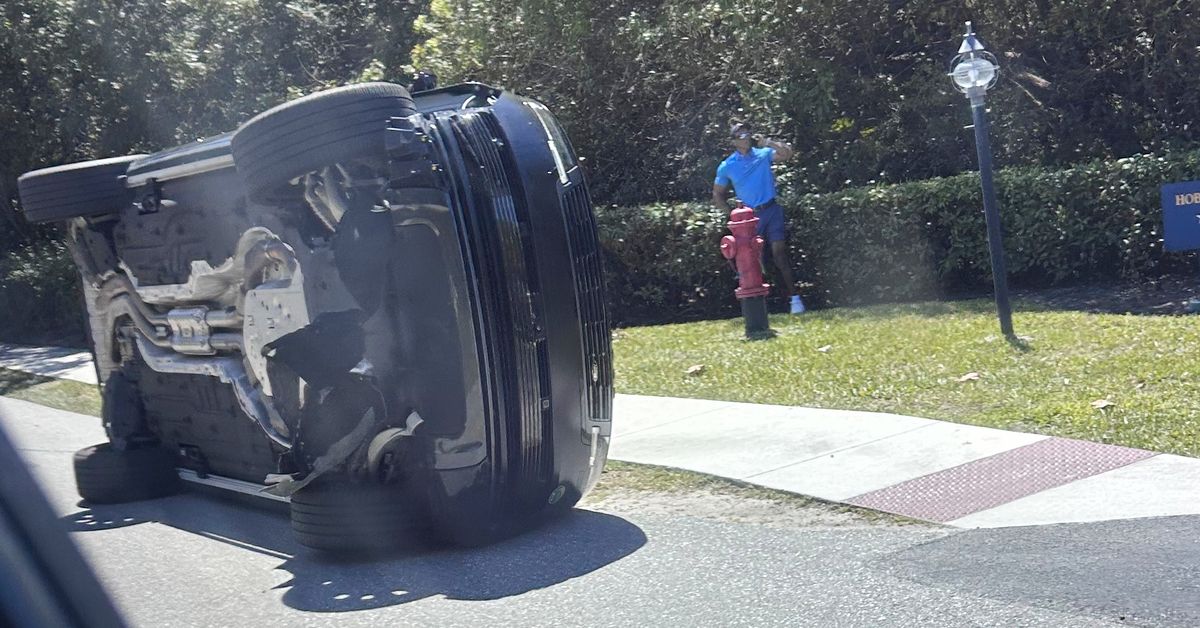
Tiger Woods was recently involved in a car accident in Florida, during which he exhibited clear signs of impairment, according to a report from the Martin County Sheriff’s Office. When deputies arrived at the scene, they noted that Woods had bloodshot, glassy eyes, dilated pupils, and showed lethargic movements while sweating. He admitted to having taken prescription medication earlier that day.
Authorities discovered hydrocodone pills, an opioid commonly prescribed for pain management, in his pocket. Woods informed the deputies that he had been distracted, fiddling with his phone and the radio, just before colliding with the vehicle in front of him. The accident occurred while he was allegedly driving at high speeds on a residential road in Jupiter Island, resulting in considerable damage to the other vehicle, estimated at USD 5,000 (around AUD 7,300).
Fortunately, neither Woods nor the other driver sustained any injuries. A breathalyser test indicated that Woods had not consumed alcohol, but he declined a urine test, which has led to his arrest and charging for driving under the influence, property damage, and refusal to take a lawful test. Following his arrest, Woods was released on bail after approximately eight hours.
Woods’ agent, Mark Steinberg, has not responded to media inquiries about the incident, nor has any representative from his team or the PGA Tour issued a statement. The golfer, who is also on the board of the PGA Tour and chairs a committee focused on reforming competition models, has a history of car crashes, which adds further scrutiny to this ongoing situation.
It’s important to note that a recent change in Florida law has classified the refusal to comply with a law enforcement breath, blood, or urine test as a misdemeanor for first-time offenders.