
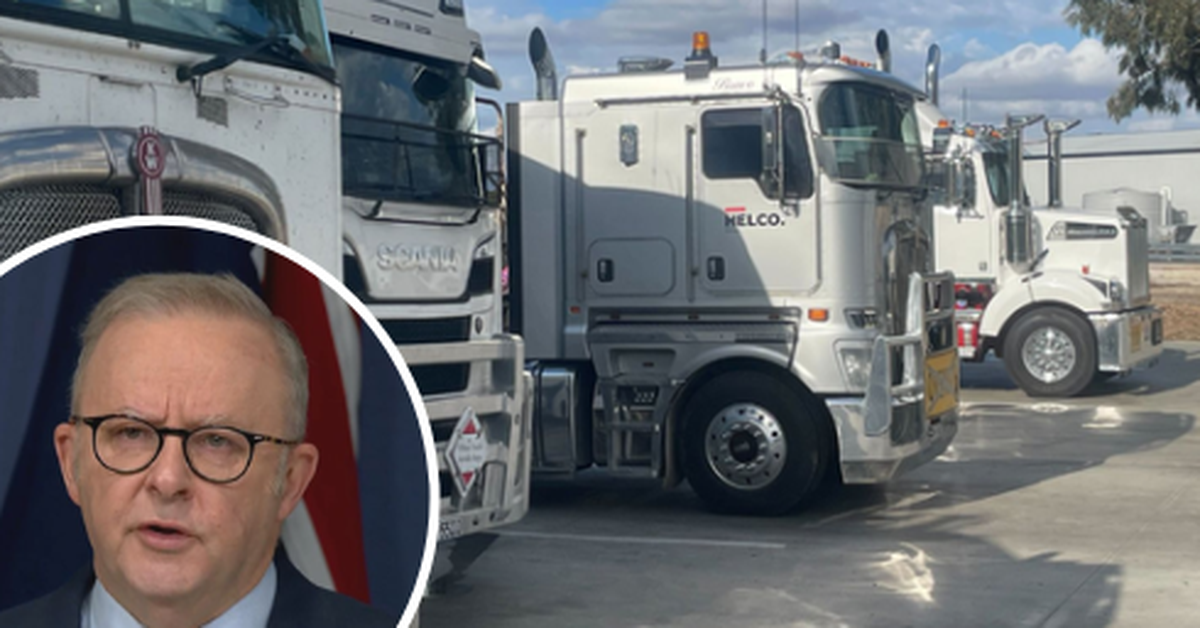
The National Road Transport Association (NatRoad) has expressed concerns over recent government measures to address Australia’s escalating fuel crisis, deeming them insufficient and delayed. With businesses currently struggling to survive, NatRoad’s CEO Warren Clark emphasised the urgent need for immediate relief, as many transport operators are facing financial hardships “today”.
Prime Minister Anthony Albanese announced today that the government will acquire new powers to facilitate private importers in sourcing fuel, aiming to alleviate rising prices and curb panic buying. However, Clark noted that the transport sector requires prompt support, highlighting that companies are overwhelmed by fuel costs that have surged for many, and they are unable to meet their financial commitments.
Clark called on the government to implement practical solutions, such as emergency financial aid for transport businesses. He pointed out that even if operators were able to renegotiate their contracts, it could take weeks before any relief would be felt financially. Many operators are reportedly spending upwards of half a million dollars monthly to cover the disparity between their contracts and the soaring fuel prices at the pump.
In addition, NatRoad has urged the immediate suspension of heavy vehicle road user charges and to provide a six-month grace period for loan repayments on heavy vehicle equipment. As Clark stated, “Businesses are going under now,” not in weeks or months. The situation has led to drivers experiencing declined fuel cards and operators scrambling to locate diesel.
The impacts are expected to worsen in the upcoming weeks when fuel bills are due, with Clark predicting that the arrival of these bills could mark the end of the road for many operators. He warned that if action is not taken soon, the supply chain for essential goods, from supermarket inventories to construction, could be severely disrupted.
The government’s new powers to assist fuel sourcing will be activated shortly, allowing for the underwriting of fuel purchases by the private sector, including fertiliser and other necessities. Albanese mentioned that discussions with local and international fuel suppliers are currently underway to secure new shipments essential for maintaining operations in Australia.
Climate Change and Energy Minister Chris Bowen provided updates on current fuel supplies, mentioning Australia’s petrol reserves equate to nine days and diesel to approximately one month, though the supply situation remains tense as demand continues to spike, especially in regional areas. He cautioned that volatile fuel prices might also rise due to ongoing geopolitical tensions in the Middle East.
The Australian Competition and Consumer Commission recently reported a 10 per cent increase in average diesel prices, reaching $3.03 per litre. With fleet operators currently in distress, immediate government intervention is deemed crucial to ensure the survival of the transport sector and the broader economy.