
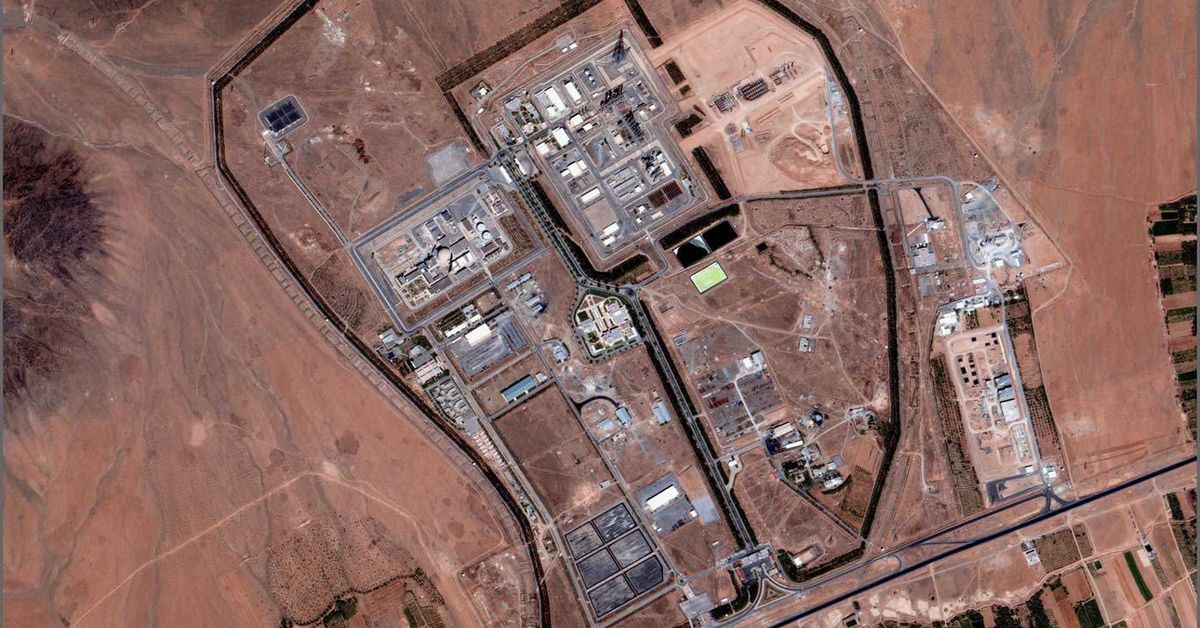
Iran has declared intentions of retaliation following Israeli airstrikes on two of its nuclear facilities. According to statements made on the social media platform X, Israeli officials assert that these attacks were carried out with U.S. coordination.
The Israeli Defence Forces (IDF) reported targeting a prominent heavy water plant in central Iran, which they claim is crucial for plutonium production associated with nuclear weapons. In their communiqué, the IDF emphasised that they would not permit the Iranian government to further its nuclear ambitions, which they perceive as a threat to both Israel and the wider world. Iran’s Atomic Energy Organisation contradicted claims of significant damage from the attacks, asserting there were no casualties or radiation leaks.
Internationally, human rights organisations have voiced strong opposition against the strikes on nuclear facilities. Melissa Parke, Executive Director of the International Campaign to Abolish Nuclear Weapons (ICAN), warned that such military operations jeopardise civilian safety and likened the situation to playing a dangerous game with human lives. She urged for an immediate cessation of military actions from the U.S., Israel, and Iran, advocating for a return to diplomatic discussions. Although ICAN maintained that a direct hit on a nuclear facility wouldn’t result in a catastrophic explosion akin to a nuclear detonation, concerns about potential long-term radiation impacts on the region were highlighted.
In response to the escalating tensions, overnight counterattacks from Iran targeted locations in Kuwait and Saudi Arabia. Concurrently, Iran has consented to permit humanitarian and agricultural aid to traverse the Strait of Hormuz, where it had been effectively imposing a blockade, thereby hindering the movement of maritime traffic into and out of the Persian Gulf. This decision is intended to facilitate food shipments into the region amidst the ongoing unrest.
The situation remains delicately poised, and the international community is closely monitoring developments as hostilities could have wide-ranging implications for regional stability.