
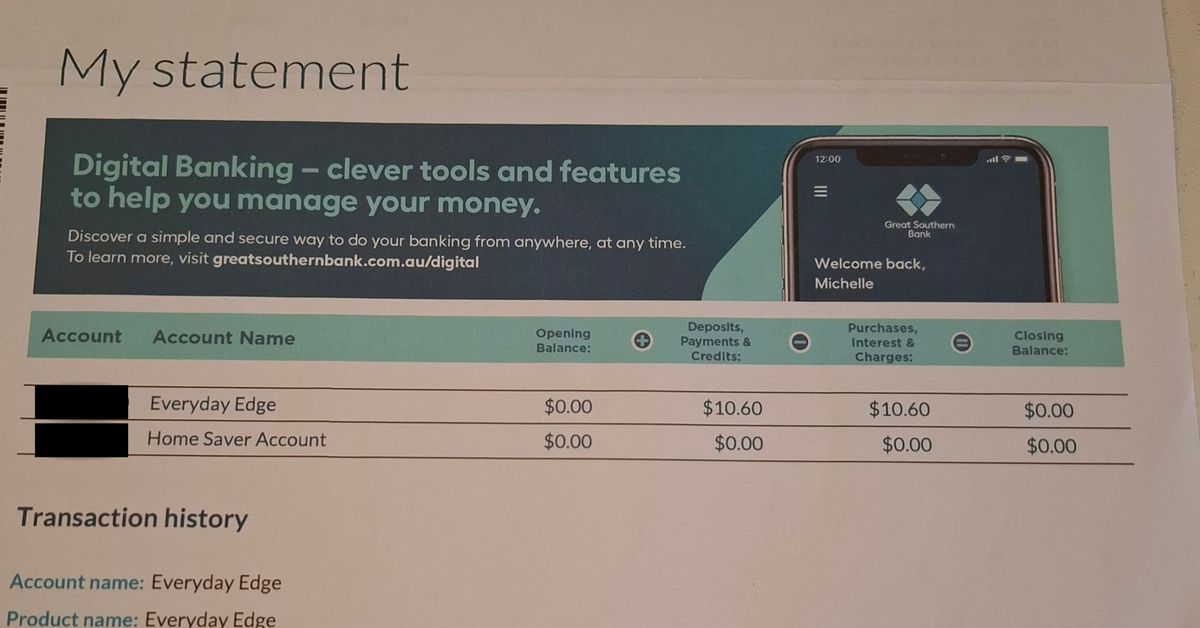
A woman named Anna, who was not a customer of Great Southern Bank, was startled to find a debit card addressed to her in her mailbox, accompanied by bank statements indicating the creation of three fraudulent accounts—one under her name and two under her son’s name. She and her son received their cards on the same day, raising her alarm about the situation.
The bank statements revealed that $200 had been deposited into one of these accounts and later transferred to another account with UBank, mistakenly registered under “Mrs.”—a title Anna has never held. Her son’s accounts included small transactions, adding to her distress and prompting her immediate action to rectify the situation.
Upon contacting Great Southern Bank, Anna learned that the accounts had been opened using scans of their passports, which she suspects may have been compromised from her Google Photos. While the bank stated that such identification sufficed for account creation, she found it alarming how easily these accounts could be set up with minimal verification.
To protect her identity, Anna filed a police report and reached out to the Australian Financial Complaints Authority (AFCA). Amid her pursuit for clarity, the bank eventually acknowledged the fraud, closing the accounts by late August. Their representative noted that the account opened in Anna’s name used an Australian passport.
Despite the bank’s claims of rigorous anti-fraud measures, Anna expressed concern about the ease with which identity thieves could exploit such vulnerabilities. She speculated that the breach might stem from a previous security issue with her Google account, where her credentials had been flagged as compromised.
This unsettling experience has left Anna questioning the safety of personal data within banking systems, highlighting the ongoing challenges posed by identity theft and the importance of stringent verification processes in financial institutions. The incident underscores the potential consequences of data breaches in the digital age and the need for enhanced protection measures to safeguard individuals’ identities.